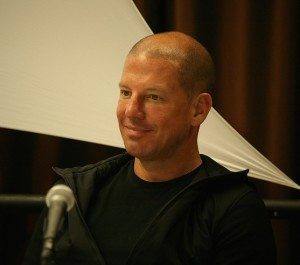

Why you should listen –
Todd White is a self-described biohacker and head of Dry Farm Wines. Dry Farm Wines curates wines from small family farms all over the world that are committed to producing pure natural wines. It is the only company in the world that biohacks wine; quantifying organic and natural farming practices, as well as low intervention natural winemaking practices. On this episode of Bulletproof Radio, Todd talks to Dave about sulfates and additives in wine, the dangers of sugar, wine label requirements, ideal alcohol dosages and wine pouring etiquette in restaurants. Enjoy the show!

[embedded content]
Podcast: Play in new window | Download
Follow Along with Interactive Transcripts!
CLICK HERE to read the transcript and easily share your favorite excerpts with friends!
Click to hide transcript
Click here to download a PDF of the transcript!
Speaker 2: Bulletproof Radio, a state of high performance.
Dave: Hey, it’s Dave Asprey with Bulletproof Radio. Today’s cool fact of the day is that a lot of the wine you can get, especially in the US is so not Bulletproof and there’s lots of reasons for that, but to give you a couple of examples why, about 99% of US vineyards are irrigated and they use synthetic fertilizer which has an impact on the soil. Guess what the number one herbicide used by US vineyards is. It’s Monsanto’s Roundup. This matters because they say Roundup doesn’t harm humans because it harms bacteria.
Guess what lives in your soil. There’s fungus, there’s bacteria. They work together to make a healthy soil. When you have messed with bacterial enzymes and bacterial reproduction what happens, and this is documented in studies, is that the microtoxin production of the fungus in the soil goes up by hundreds of times. Microtoxis are neurotoxic, genotoxic and toxic to your ability to make energy in your cells. These are things you don’t want growing all willy nilly in your soil especially if you’re then going to ferment those grapes. That doesn’t sound very Bulletproof to me.
Speaker 1: It all starts with your website. BulletproofExec.com is where I started. The website’s immensely important to Bulletproof because that’s how we help millions of people every month. Growing your business starts with this stunning website. No matter what business you’re in Wix.com will have something to help you create a kick ass website. Wix.com is a cloud based development platform that’s used by more than 70 million people throughout the world. You can do it yourself. You don’t need to have a programmer or designer and they have hundreds of designer made customizable templates to choose from. There are easy drag and drop features with no coding needed and you can get your website live today. With mobile optimization, secure hosting, SEO, 24/7 support and more to help you build your company the way I did. It’s easy and the result is stunning. Also check out the stories on W-I-X.com to see real success stories of people who’ve used Wix to build great websites. Go to Wix.com and sign up for an entirely free account today, no credit cards required. That’s WIx.com, W-I-X.com. check them out today.
Dave: Before we get into the show I want to talk about something I don’t mention enough. You probably don’t know this, but if you are on your iPhone or your android and you went out and searched for Food Detective that is a free Bulletproof app. It’s really cool because it uses your heartrate, not your heartrate variability, but actually just your actual heartrate, it gets it from you camera or you can type it in. You use that along with a little food thing when you enter what you ate, a diary. It’ll tell you which foods are triggering your sympathetic nervous system just by looking at your before and after meal thing.
That’s cool. That’s called Food Detective. If you want to step it up a notch we have … That app is free. It’s downloaded a lot of times. It’s one of the fastest way to tell which foods are making you weak. In fact you can use it to tell if something in wine is causing a problem for you of say something like histamine which you can hear about in a little bit. There’s also one called Stress Detective that has all of those features, but it uses a chest strap heartrate monitor. If you do that, Stress Detective, it’s a few bucks. It’s not expensive. The heartrate straps run around 40 to 100 dollars. If you do this you can wear it all day long for just a week and it’ll give you a graph at the end of the day.
It shows what was most stressful to your nervous system during the day. You can figure out that your meeting with your boss was not stressful, but the meeting with your, say, one of your peers was super stressful. You can figure out that your commute home actually really does piss you off or that the commute home isn’t bad. When you walk in the door and your kids tackle you before you’ve had a chance to take a deep breathe, that is stressful. Having the ability to look at this and see what your nervous system is doing and correlate with your calendar is a cool deal. I learned some things about my life from that. That’s called Stress Detective and the free one is called Food Detective on both the Apple and the Google Play stores. Check it out.
Now on to the show. Todd White, who’s our guest, is the founder of Dry Farm Wines. I’ve gotten to know Todd over the last couple of years because he’s a biohacker and he’s been at the Bulletproof conference. In fact was serving some wine there. If you’ve read my book or you’ve listened to a lot of radio shows with me I’m one of those guys who’s, I really want wine … in fact I want all alcohol really healthy. If only two glasses a day was going to stave off Alzheimer’s disease and make me perform better wouldn’t that be great? In fact I also like high fructose corn syrup to be something that would make me perform really, really well and Ben and Jerry’s ice cream. In fact pizza. Pizza was just super food, oh my god, wouldn’t it be great. No matter how much you torture the science you actually can’t say that tobacco’s good for you. A little bit of nicotine probably is, but smoking isn’t.
I’ve gotten to the point where if you’ve read the Bulletproof Infographic, download it for free, I’ve ranked things saying, “A pre-filtered alcohol like vodka is best and the worst is beer, but right next to that is red wine.” I’m saying, “These are the ones that are causing those problems.” After I’ve done all this science, read all these studies, looked at toxin levels, both ochratoxin, other metabolic byproducts here comes Todd White and he biohacks wine and uses organic and some of the other farming practices that I use in coffee and then he did what I did with coffee which is he quantified the farming practice. He used lab testing to validate that he was creating what he wanted to create instead of going, “Oh, this tastes nice.”
Think about this for a minute. You have a whole generation or many generations of wine … asomeone goes, “It tastes like tennis shoes,” or whatever the wine tastes like, I’m not a [inaudible 00:06:01] But you also have multiple generations of coffee people going, “I have notes of …” whatever that they tasted in their coffee. “I have notes of cherry or vanilla or tobacco.” We just did a big coffee tasting the other day. It’s the same thing. Let’s just be really clear. These are people who have hyper sensitive noses and palates who go through and then quantify only the taste. Both of them have numerical ratings, but neither of those things has been very biochemically accurate.
In the case of wine, in the case of coffee there’s only one company in each space who’s looking at flavor and biochemistry from a human performance perspective instead of from this perspective of let’s see what biochemistry generates the best taste. Screw that noise. What biochemistry generates the best performance and the best taste. That’s what matters. That’s why Todd is on the show today because we’re going to talk about biohacked wine. I really appreciate what he’s done. I’ve looked into it in detail. Todd, that was a pretty big intro. Welcome to the show.
Todd: Thanks Dave. I don’t know if I’m going to be able to put wine and pizza in the same category.
Dave: Here’s what we do [crosstalk 00:07:13]
Todd: Exactly. I don’t eat pizza. As you know I’m ketogenic. I’m a non-gluten guy. Here’s where we do agree and I give a lot of thought to this. We have an amazing relationship with Bulletproof. We were the wine sponsor at this year’s Bulletproof conference. For your listeners who haven’t been to the conference, we go to a lot of health conferences because we’re the only biohacked wine on the planet. We get invited to be wine sponsors at many conferences. As you know, you and I see one another frequently at conferences. The Bulletproof conference is very special in that the energy and the learning and the people mainly. I encourage any of your listeners who haven’t been to the conference to really reserve that space this September in Pasadena for an amazing experience.
Dave: Thanks for the plug venue, you don’t have to do it. I appreciate it.
Todd: I’m not plugging it dude. I’m just telling you from the heart that I have, as you know, Mark Moshel is a good friend of mine now. I met him there and he’s been a long time an associate of yours.
Dave: He’s our MC at the conference.
Todd: Just your whole team. That’s another thing that’s so remarkable. The Bulletproof team, the culture is just so supportive and friendly. I’ve read all of your books and followed your work closely and here’s what we clearly agree on about alcohol. You and I are going to have some real clear agreement. Alcohol is toxic. So is water and oxygen in the wrong dosage. The second thing we’re going to agree on is alcohol does nothing to enhance performance or Bulletproof performance.
Dave: [Inaudible 00:08:59] Resveratrol, come on man, it’s good for you.
Todd: Listen, Resveratrol is a red herring. Has all the polyphenols as you know. You would have to drink so much wine to benefit from the resveratrol element that you’d be swimming in it for the rest of your life.
Dave: It’s like lycopene in ketchup. It’s like come on guys. Just because it’s in there doesn’t mean it matters.
Todd: That being said here’s what alcohol is good for. First of all it can be a lot of fun and most of you, in the right dosage … We’re going to talk today, I remember when you and I first had a moment to speak about this at the Bulletproof conference at one of your VIP donors which was, I said, “People need to think about microdosing alcohol.” You said, “I like that, that’s a good idea.” We’re going to talk about dosage because dosage really matters, but I think where alcohol and particularly wine … I don’t drink beer naturally because all of its problems and I don’t drink spirits because I don’t want that high the dose of alcohol. I understand the argument around the distilled purity of it. I’ve got all that, but for me I want to find … I enjoy wine.
I’ve been a lifelong wine lover. My friends are lifelong wine lovers. I live in the heart of the Napa Valley. Wine is a part of my culture, particularly around meals and community. Here’s what wine does do and here’s what alcohol does do that’s very positive in the right dosage. Alcohol raises euphoria. We get in what I call the happy zone. We’ve got an increase in euphoria, but most importantly, and Dave, I know you’ll appreciate how important this is when you’re bonding and getting to know people, most importantly it also lowers inhibition slightly.
Dave: So then if I heard that right alcohol gets you laid?
Todd: Definitely gets you laid, it definitely gets you laid, but in a cultural setting, when we’re sharing and bonding with one another, when we have this vulnerability that increases a little bit when inhibition’s coming down and the euphoria, where I want to stay in a happy place with wine and alcohol is where I’m still creatively expressive. There’s still cognitive energy there. Where we’re having a deeper better connection because of this community of sharing and exploring wine and adventuring around the world on wines. That’s what we do. Combining that with Bulletproof food, together that’s where alcohol is beneficial, when people bond and have moments of clarity and vulnerability together. If the dosage gets too high that’s a problem.
Dave: I’m with you there where there’s some things like what if you need to fly across eight time zones, land and then go give a presentation or have an important meeting? It’s actually bad for you. There’s no argument that that’s a beneficial thing to do. However you’re going to do it. You might as well do it in a way that’s most beneficial given the constraints. If what you’re going to do is you’re going to have some wine and you’re going have the right amount of it and you’re not going to have the downside that would come if you were drinking a lot of wine. I fully support that. Biohacking isn’t about avoiding everything. It’s knowing what you’re doing and then taking control of the effects of it.
I was skeptical as all hell when the Bulletproof team was like, “Hey Dave, you’ve got to talk with Todd.” I’m like, “Really? Having a wine sponsor at the conference? Why don’t we have Phillip Morris while we’re at it next?” Like, “No, no, pay attention to this.” I really dug in and I’m in full agreement with what you’re saying. I would prefer to drink wine to spirits because I like wine better. I don’t drink very much, but I can tell you, I had a glass of your wine at the Bulletproof conference and that is the least likely time for me to have any kind of alcohol because alcohol does have a downside.
Most people who haven’t run a conference like that probably don’t have a conception of how much energy it takes. To be able to show up on stage and were every minute of every day, it’s fully maxed out because there’s literally 1,500 people there or 1,300 people there and they all want to talk to me. My kids are there. My family, my kids want to talk to me. It’s just non-stop and you sleep six hours a night and you do it again. I would never even think of having alcohol in an environment like that, but I had a glass of wine because I can actually handle that very, very well because of the way you treat the wine.
Let’s get into what’s different about a properly made biohacked wine. This isn’t meant to shit on any of the wineries out there that are making really flavorful wine according to traditional techniques. It’s just that they make wine that’s flavorful and amazing, but it has some hidden stuff in it that affects a lot of people negatively and that I think we can change the wine industry just as Bulletproof is starting to change the coffee industry where people are starting to talk about this problem that the American government didn’t protect us from toxins in coffee, even though most of the other world governments did. It turns out the American government does have standards for toxins in wine. They’re just not as good as other countries. Tell me what you do in your wine, what’s different.
Todd: I want to touch base back for a second on an earlier podcast that you had done about alcohol. In that podcast you mentioned that when you drank red wine it was European and older than you.
Dave: Yeah, it had to have the yellow label. Not for export label, it’s meant to stay in Europe where they keep the good stuff.
Todd: This brings up an excellent point now, thinking the foundation of your question. Wines 42 years ago, plus, I think you’re 42-
Dave: Are you saying I’m old? You said I was old.
Todd: You look awesome, but maybe it’s the lighting in the studio.
Dave: It’s the stem cells I just did last week.
Todd: I heard about that. Somebody was telling me that at a conference this past weekend. Wines 40, 50, 60 years ago were made exactly the same way our wines are made today. They were additive free, they had low intervention in the farming and low intervention in the winemaking. You’re absolutely on point when you say I want to drink a wine that’s older than I am. Except for the wines that we procure and represent. The reason our wines are different is because we have taken lab quantification to an already pure product to ensure that it meets our standards of purity.
Let’s start back. At the very beginning biohacked wines are organically or biodynamically farmed. The absence of any chemicals, synthetic fertilizers or any kind of poisons. In our case most of these farms have been organic or biodynamic for decades. Most of the lands for the farmers that we represent, which are exclusively in Europe, most of them are multi-generational. These guys are like activist farmers. They’re like stewards of the land. They’re hippies. They take real sincere pride and devotion into stewardship of the land. They take real pride in discussion and the feeling of living soil. I don’t know if you saw doctor Joseph Mercola’s post last week on the importance of living soils and even having our children in living soils. When you touch a living soil you can pick it up and you can feel it and you can look at it and see the organisms and the beauty of it.
Dave: If I turn the camera that way it will look down at the garden that grows all the food my family eats. My kids are in there every day digging and all. It’s part of living. We go back to the soil when we’re dead.
Todd: Living soil is where the foundation of farming begins. Then second of all for the grapevine, and this is not true for all things that we grow, but for the grapevine the first point of intervention, I want a natural whole product. Every time I can get the most natural, the most whole product in what I consume that’s what I want. That’s true for wine. The first intervention is irrigation. All of our farms are dry farmed, meaning they have no irrigation. Let me tell you how that impacts the development of the vine and the fruit and its taste. Common sense will tell you this.
90% of a wine’s taste and character, the finished product begins with and is dependent upon the fruit that is the foundation of the product. It’s just like if you squeezed a winter tomato from the supermarket, the juice out of it and a summer ripe tomato from your vine there in BC you would have two different types of juice. It doesn’t matter what you do to that bad tomato, it’s never going to taste good. Wine is the same way. The foundation of this product, its quality both from a biohacked health point of view as well as its taste began with the fruit.
An irrigated grapevine has a root ball that’s about three feet wide and deep. it’s very small, because it gets all of its water and nutrients from the surface. An unirrigated grapevine has a root structure that runs 30, 40, 50 feet deep and around. It’s searching for nutrients and water because it has to go find it and break apart little pieces of soil looking for nutrients and water. Common sense will tell you, and there’s a lot of debate within the industry because almost all of North American vines are irrigated, 99% plus of them are irrigated. There’s a lot of debate about this topic. I would tell you from my experience and common sense tells me that that fruit is more complex and that that vine has struggled to build its root structure and its complexity and the quality of fruit that it delivers.
It begins with the irrigation, proper caring of living soils and from there once you go into winemaking here’s the main difference between what our farmers do, and our farmers in Europe are also the winemakers. They’re one and the same. Often times, or the folks we deal with, often times at bigger estates and in the US you have maybe a grape grower and a winemaker in this culture of celebrity winemaker you have. They’re two different people, but in our case they’re a small farm, small productions and they’re always the same person. In the winemaking we’re looking for very low intervention. That means no oak programs, because we’re concerned about these heavy new oak programs and the wood compounds and we don’t know what may be coming from those.
Dave: You’re not allowing oak in your production?
Todd: No. There are, if you into some of the farmers that we represent you’ll see big oak vats, but those oak vats are all the neutral. They do not impart any compound or flavor from the wood.
Dave: So old oak is okay, but new oak …
Todd: That’s correct. Oak will go neutral in about five years. It stops imparting flavors or transferring compounds … You had a question?
Dave: Yeah. There’s an interesting study, and people, you’ll be surprised, because any time I read about these multoxins I just dig in because I want to understand why they keep occurring in our food. It turns out stainless steel fermentation is more likely to produce toxins during fermentation than oak, but that’s necessarily new oak. It’s any oak. If I had a choice I would want old oak because apparently the wood, the presence of wood or even probably the presence of some old oak in a stainless steel thing changes the response of some of the microorganisms in a way that I find fascinating, but I’m impressed that you’re using only old oak, not new oak, because I also oak tannins are maybe, they change the flavor, but what they do biologically … I’m not sure we evolved to eat oak tannins. I’m not sure our gut bacteria really like those things. I just don’t know.
Todd: I don’t know. They don’t agree with me. I also don’t like the taste of it and it’s just heavy handed. It’s intervention from the winemaker. We’re not dealing with honest pure real wine. Wine can be fermented in stainless, glass, clay, concrete … Listen, you can make wine in Tupperware.
Dave: Fire extinguishers in prison, anything.
Todd: What we’re looking for is very low intervention wine making techniques which includes the use of no additives and chemicals. Let’s talk about that for a moment. In the United States we have 76 approved additives for the use of winemaking, approved by the FDA. I’m going to talk about this. In Europe there are 56. Our winemakers do not use additives of any kind.
Dave: That is a huge differentiator. That was one of the things that attracted me to what you’re doing in the first place. That’s how it’s supposed to be. What are the worst say five additives that the industry uses?
Todd: Let me go back to the additives for a second. Metals, copper is very common. Ammonia phosphate, a de-foaming agent. Let me tell you what a de-foaming agent is. When you move wine, when you pump wine over from its fermentation to … when you move it between tanks it creates a foam. Our winemaker, the old guy, the hippie, he just waits on the foam to die down, but because worldwide and in the US we want to make faster, not necessarily better, we want to mitigate risk and increase profits. We have de-foaming agents that make the foam go away right away so we can make the wine faster. That’s the pursuit of profits. That’s the reason we have these additives.
Let me touch on these for just a second. There are 76 of them. You can see online wine additives FDA, it’ll bring up the list for you. Here is the thing Dave, and you’ll appreciate this. Of the 76 approved additives in the US for winemaking, chemical additives, 38 of them include the acronym GRAS. That stands for generally regarded as safe. That’s just about the most reassurance we can get from half of the approved additives by the FDA. That’s disturbing to me, that the government says, “We’re going to approve this and all we know about them is that they’re generally regarded as safe.” Our wines contain none of those additives.”
Dave: What’s more disturbing to me is that the other ones aren’t even generally regarded as safe, but they’re still allowed in wine and they don’t have to be on the label either, right?
Todd: There is no labeling for wine. The only labeling requirement for wine is not even required to be accurate, by law. That’s the alcohol, and I’ll touch on that in just a moment. The wine industry has fought very aggressively and successfully a very powerful lobby to keep contents labelling off of wine. That didn’t happen by accident.
Dave: Who else did that? Would that have been big tobacco?
Todd: Exactly. Let’s talk about big everybody. Speaking of big everybody in the US 51% of the wine made in the United States is made by just three giant companies. They don’t want you to know that. It gets packaged up in thousands of labels and brands and little Chateaus to make you believe that you’re drinking from a small family vineyard but in fact these wines are made by huge conglomerates.
Dave: This is a little known fact, but E&J Gallo in Modesto, California paid for the computer science laboratory where I studied because they used to employ almost all of the graduates of the program where I went to school. I had spent a couple of years at the California state university in Turlock, California and I actually applied for a job at Gallo in the IT department when I was getting out of college. The guy looked at me, and they took me on a tour of these million gallon stainless steel vats where they were making wine. The guy looked at me and he said, “You have all the right qualifications, but I’m just going to pay to train you and I can tell that you’re going to quit and get a job somewhere else. I’m not going to hire you.”
He was actually right, but I did actually see one of those massive wine producers and we walked through it. I was blown away at the scale of this, because this is such a far cry from the old guy with the bent back and oak barrels, but that’s what we’re buying in a lot of the stores. I’m not picking on Gallo there. It’s just that I saw the scale of that. I’m like, “This is an industrial manufacturing thing that rivals the largest oil companies in terms of what they’re doing.” It was remarkable.
Todd: It’s factory farming at its best. The tank farms as they’re known, you can just see forever these massive tanks that hold wine. Let’s switch gears over to speaking of additives to talk about also … Go ahead.
Dave: Before we switch gears I wanted to talk one more thing about the additives and the chemicals there. A de-foaming agent is going to contain a surfactant thing. These are things that affect surface tension. A lot of people who are listening to this, you’re going to say, “The FDA says these things are generally regarded as safe. They’re probably not going to be harmful.” Of course the fact that half of them are not listed is a big thing, but one thing that surfactants do that isn’t well understood is what is the cell membrane in your cell? It’s a bunch of tiny droplets of oil, they’re micro droplets that repel water on both sides. They push water into the cell and they push water out of the cell. There’s no saran wrapper around each cell. It’s these tiny droplets of fat. When you take in some agent that reduces the ability of fats to make things like bubbles what’s it going to do to your body?
I don’t know, but neither do you and really for most of these things no one else has looked at their effect. There are very small biochemical things going on. You could say they’re probably fine, I’ll just buy what’s cheap. If that’s what you’re going to do you may be listening to the wrong show or okay, that’s cool, go do it. The precautionary principle that I use for my family and for my own quest to live to 180 years old is if I don’t need it I don’t want to do it. If it’s not going to provide a known benefit or a likely benefit screw that noise, I don’t want it in my food. I appreciate that you’re just saying, “We don’t need any of that stuff.” Keep going, that’s one example of some of these things you’re talking about.
Todd: Here’s the defining difference. I love the proverb, and you live by this proverb as do your followers and listeners. To feel is to understand. There’s no truer statement if you can … As you know, I coach people, I try to help people improve their life, optimize their life through biohacking as you do and you reach millions of people, but the fact is most people make changes in life through desperation, not inspiration.
Dave: There you go.
Todd: You talk to people about, “Wow, this is going to change your life,” and you’re so excited about it because you know it works and I know it works, but I always come back to the proverb when I’m coaching people or helping them get started on a program or a change, I tell them, “Listen, to feel is to understand. When you drink these wines,” and I’ll tell you a story about Mark Sisson and this wine in a moment, but when you drink these wines you just feel better. There’s no brain fog, no hangover, you just feel great.
Dave: It’s a noticeable difference.
Todd: It’s a noticeable difference and I know you don’t drink a lot of wine, but some of your team members are regular-
Dave: I drink your wine. It’s very noticeable. In fact you can get it here in Canada without a 10,000% terra for something like that. I’d be drinking it up here. I’d have to carry it in over the border myself next time. I do like your wine. If I’m going to drink red wine I’m going to pick yours, absolutely.
Todd: That, Mark Sisson for the first time at the Bulletproof conference. This is another amazing thing about Bulletproof. You’ve got these great health influencers, some of the world’s top leaders in thought, he’s roaming around on the floor.
Dave: Mark Sisson, I’m honored that he comes to the conference. I really appreciate it.
Todd: He’s terrific, but you get access and they’re there because they want to share. You get access to people roaming around. I met Mark at Bulletproof and I said, “I’m doing this wine thing,” and he’s like, “I don’t drink wine anymore, I can’t drink wine. Makes me feel bad. Wakes me up at 3:00 in the morning. I just want to think about my business problems.”
Dave: That’s the stress from the toxins. That’s a micro toxin, not even a histamine symptom if you ask me.
Todd: I said, “I’m trying to help you here. If you like wine you can return to drinking. I’m trying to help you here.” Finally he said, “Just get in touch with me.” I did and I invited myself down to his Malibu home and we did a wine tasting, I left some wine behind. He came back to me and said, “Wow, I’m a believer, you’re right. I don’t wake up and I feel great. These wines are amazing.” I’m not saying that because it’s our wines. We have a very quantified approach to it. The wines I drink, I also don’t want to wake up in the middle of the night or wake up tomorrow morning with brain fog. I want to be able to enjoy a micro dose of alcohol. Let me switch gears to sulphides for a second.
Dave: Yeah, I was going to ask about that. There’s three big things in wine, tell me about sulphides.
Todd: Sulphides are … first of all they’re naturally occurring in winemaking. Even if you have no added sulphides it’s possible that you could have up to 20 or 30 parts per million of sulphides without adding any Sulphur at all. The US limit for sulphides is 350 parts per million.
Dave: What’s the European limit?
Todd: I’m not sure what the European limit is.
Dave: It’s probably lower than that.
Todd: We don’t represent any wine that exceeds 75 parts and most of the wines that I drink are under 20 parts and most of the wines that we sell are under 20 parts per million.
Dave: What’s the problem biologically with sulphides?
Todd: Nobody knows. Here’s what we do know. The red herring, or maybe you have some insight to them, the red herring is that sulphides make you feel bad or that people are allergic to them. That’s just not typically true. There are more sulphides in a bag of potato chips, I don’t eat potato chips, I’m sure you don’t ether, but there’s more sulphides in raisins and dried fruit, which we probably also don’t eat, but sulphides are everywhere in food. They’re everywhere. Wine actually contains a very low amount of sulphide.
Dave: Even wine where there’s some added.
Todd: Yes. I want to have at some cases some slight added Sulphur as a preservative, but as I said it’s very low and most of our wines have no added Sulphur.
Dave: Here’s my perspective on that. People who are, “allergic” to sulphides are most likely allergic to one of the other two compounds in wine. If they’re getting an immediate response to the wine it wasn’t … It was a biogenic amine, it wasn’t the sulphide. Most of the sulphide reactions aren’t so fast. People have a hard time with Sulphur in wine they’re also going to have a hard time with other foods tying Sulphur and they have a genetic defect in their transsulphation pathways. This is one of those things that I’ve talked about in a couple of other episodes where we look at your methylation pathways.
I actually have a slight problem with sulphide. It’s a homozygous, it’s not heterozygous. I handle Sulphur pretty much just fine. I can use MSN, I can float in a float tank with absinthe salt and absorb Sulphur through my skin, it’s no big deal. There’s some people that’s going to mess them up. They have a problem with Sulphur in wine, but it’s a small percentage of people compared to the number of people who are “allergic” to sulphides. They’re getting a response, but I don’t believe it’s Sulphur based. It’s something else. Let’s talk about the other two things there might be in wine. What are the things that you also test in wine?
Todd: We test for a number of things that we’re looking for. I want to dial back for just a second on the labeling because we didn’t finish this thought.
Dave: Yeah, let’s talk about labeling.
Todd: Yeah, we didn’t finish this thought and we skipped on down the road a bit in our enthusiasm. I want to touch base on the labeling. The only thing that’s required to be on a wine label relative to the wine in the bottle is the alcohol. Here’s the problem, your fine US government which has mislead you on a number of nutritional and diet aspects-
Dave: They wouldn’t do that.
Todd: No, exactly. The alcohol is not required to be accurate by law and can be as much as percentage and a half point off. Further under random testing studies have found that in many, many cases it’s more than a percent and a half off because there’s no enforcement around it. Typically it’s always rounded down because there’s a perception that lower alcohol is healthier and wines with lower alcohol taste better, which they do.
Dave: What’s your standard of deviation? You can’t be perfectly accurate on each bottle.
Todd: We are. We have every bottle lab tested.
Dave: Every single … it must be every cask or something, you’re not doing-
Todd: Every wine. We actually represent farmers and winemakers in Europe. We’re not making the wine, but before we accept it into our portfolio we send every single wine to a certified third party enologist who does independent lab testing for us, unaffiliated. We don’t do our lab testing. We want to make sure that that process is independent.
Dave: It has to be independent. I do that too. Actually I have a variety of labs depending on what I’m testing for in coffee. You want it to be independent labs. I ended up having to working with the labs to specify the specific technologies to find this versus the specific technologies to find that, but I don’t want to run all that stuff. It’s better to get the reports from a third party.
Todd: When you see alcohol on a label it’s likely not even correct and it’s not required to be. Finishing up on the label, coming back to your question, we believe .., As you pointed out, the people who have an actual Sulphur allergy or allergy to sulphides is really, really tiny. Really tiny.
Dave: It’s probably a headache, not the other allergic response.
Todd: It’s really tiny. What most leading scientists believe and we believe is it’s more likely histamines and other bio amines that are causing folks to feel bad. To give you an example why we know it’s not sulphides just anecdotally. People who complain of wine making them feel bad usually say that they can drink white wine, but they can’t drink reds. In fact sulphides are higher in white wines than they are in red wines, but histamines are not. Histamine in wine comes from contact with the skin and natural tannins in contact from the skin. Your audience may know or may not know, and you probably know, but if you squeeze juice from a white grape and you squeeze juice from a red grape the juice is clear from both. Red wine gets its color from maceration or soaking on the skins. Histamine is created from that process.
Histamines are exacerbated and exaggerated by long maceration period, long soaks on the skin. The reason that’s important is because in the US, maybe worldwide, but certainly in the US, consumers believe that the darker a red wine is the better quality it is. That’s simply not true. What it is true is that it’s going to have more histamine in it because the histamines are created from these long soaks. All of our wines are not subject to these long soaks. You can taste the difference. You can see that they’re clear, that they’re lighter in composure because they don’t have this long term maceration. Histamine typically causes people to have a tightness right above their nasal, right here.
Dave: Wherever that migraine starts, that one.
Todd: Yeah, exactly. To your point, as we’ve discussed it earlier, it’s really the bio amine and other …
Dave: It terms out there’s three or four different kinds of biogenic amines which can cause problems. Funny enough that soaking period with the fruit that produces histamine, is there another fruit that most of the industry soaks? Yes, I believe we call that the coffee cherry. Do I allow long soaking of Bulletproof coffee beans? No, our coffee process is different. It’s a continuous flow, non-washed coffee and it’s not traditionally processed either. It’s the Bulletproof process. We do this because the other thing that occurs in wine and in coffee, because it’s a similar process, is let’s see: you get the biogenic amines, it’s histamine, but it’s also an even worse one called tyramine. This is a major trigger of migraines. You get tyramine in wine, you get tyramine in coffee and you get histamine in coffee. Guess what’s not in Bulletproof coffee beans?
This stuff matters. You go to the really fine detail and I feel for you man, because here’s what happens with wine and especially with your wine. People drink wine, they say, “I feel bad, therefore I’m allergic to sulphides.” People drink coffee, they feel bad, “Therefore I’m sensitive to caffeine.” What I’m finding is most of the time it’s not true. What’s going on is you’re sensitive to histamine or you’re sensitive to micro toxins in coffee depending on your symptoms and it’s the same in wine. I [inaudible 00:40:35] that you’ve gone through that process of wine. You’re like, “Okay, we’re going to eliminate all these things by doing these tiny little things that no one thought about doing before.” You create a glass of wine and suddenly I can drink it and I feel like myself instead of all this other stuff that happens. Let’s talk about these other things. We talked about histamine. Can you talk more about tyramine and where that comes from in wine?
Todd: It’s from the same processes of these long soaks and macerations. They’re all coming from the same place.
Dave: It’s microbial action during the long soak essentially. This is a byproduct of these things and it comes from breaking down different amino acids that are present in small amounts. It’s the same thing.
Todd: It’s exactly the same thing. Let me switch gears over to micro toxin. The ochratoxin A, all of our wines are screened for ochratoxin because I know your coffee is. You are also aware because you and I had discussed it that the limit for ochratoxin A in Europe is two parts per billion.
Dave: For wine, you’re right.
Todd: Yeah, for wine. For coffee it’s five, is that correct?
Dave: Correct. It used to be eight, they just lowered it to five because apparently they think it matters. Not in the US though. In the US we just drink it.
Todd: There’s no screening in the US for coffee or for wine.
Dave: I thought there was a limit of like 15 for wine, there is no? That’s shocking.
Todd: No, there is no screening. It’s not required.
Dave: US government, wake the hell up on this stuff. There’s a reason, China … I’ve been to China multiple times, I love China, but the Chinese government isn’t known for taking good care of its people. That said, they have government regulations around ochratoxin A. what is going on in the US? We’re willing to take the stuff rejected by Japan, China and Europe when it comes to wine and when it comes to coffee and we’re willing to just give it to our people. That actually pisses me off.
Todd: Here’s what you’ll love even more. There is ochratoxin A screening on US wines when they’re exported. There are countries that require it before they allow the wine to come in the country, but it is not screened for here or monitored in the US.
Dave: That is hilarious. That’s why until Dry Farms came along I’m like, “All right, here’s the deal, generally don’t drink red wine. If you’re going to drink very old red wine,” or there’s another vineyard that I recommended, it’s called Frye Vineyards. It’s the only American wine that I would drink, F-R-Y-E. The reason I like these guys, I actually went out there and you’re saying hippies. It’s a biodynamic farm and you go there, the entire winery is built of recycled buildings. It looks like a homeless shelter. It’s got all these crazy buildings stuck together. Everything inside it is recycled and you go for a wine tasting and they’re like … they find a two by four and set in on some barrels and dust it off and set some wine there.
It’s the opposite of any big fancy winery I’ve ever been to, but I found I could drink a biodynamic one like that and I felt okay. Not always, but I felt pretty good to the point that if I was going to get a wine can I find this one random small thing, but I don’t believe they have the quantification that you do. I know when I drink the Dry Farms it’s different, just like I feel different when I drink Bulletproof coffee beans versus normal coffee beans and there is variance. You go to this wine from this year, you get this effect and you don’t get a headache or you do get a headache. You can drink this wine from this year from the same place. You’re like, “I don’t feel good. I want to go to sleep.” You do test for OTA in wine and you’re finding that … Are you standards better than European standards? Are they the same? What do you do?
Todd: They’re the same.
Dave: Two parts per billion.
Todd: I’ve never seen any that approach two parts per billion. It’s just that’s the threshold.
Dave: With the agricultural processes that you have in place I would expect not to. The coffee standards of five parts per billion, my standards are tighter even than two parts per billion, but it’s just to prove that our process, which is supposed to have none or as close to none as you can get. There’s no such scientific answer as pure zero because one particle per 50,000 container loads is still none and you would never detect that with normal sampling anyway, but to get it as close to possible, our process is designed for that. The idea there is you want a very, very low standard and the fact that you’re finding below your standard is a sign that your process worked. If you found out the standard you’d probably start making some phone calls.
Todd: Let’s switch gears for a second over to dosage. Remember when we first met I mentioned to you this concept of micro dosing which is how we view alcohol, the drug. Alcohol’s not even my drug of choice. It happens to be my cultural drug of choice.
Dave: I’m with you there.
Todd: I just love wine, I love the way it tastes, I love the exploration around the world, I love the adventure, but alcohol’s a shitty drug. As such we need to be very careful and think what we do is try and educate people to help them think about drinking and how to use alcohol as an effective drug for your pleasure. The US government again, I have to report, has misled you.
Dave: Shocking.
Todd: They did this by saying, and you probably heard this, the government under influence from the alcohol industry has said, “You can measure alcohol consumption in what the US government calls a standard drink unit.” A standard drink unit, and all of your audiences no doubt heard this-
Dave: You learn this in high school.
Todd: Is that a beer, a glass of wine and a mixed drink are all the same amount of alcohol. Have you heard of that?
Dave: It’s not true, but I’ve heard it.
Todd: Clearly categorically it’s false. In 1987 in the UK the British government developed a way of communicating with their citizens to help them understand intoxication and alcohol and its effect on intoxication in a more quantified way. It’s the formula that we recommend. If you go online, UK alcohol units, you’ll see a Wikipedia page on it, but I’m just going to give you the short math. In an alcohol unit, and we don’t want to drill too far down the wormhole down here, I don’t want to confuse anybody, but an alcohol unit in the UK is 10 milliliters of ethyl alcohol. How you calculate the number of units in a given alcoholic beverage is you take the milliliters times the alcohol by volume divided by 1,000. Let me just break that down for you very quickly. In the US since we’re working with ounces, most people relate to ounces as opposed to milliliters. In order to get the milliliters you take the ounces times 29.6 and that will give you the milliliters. In a standard glass of wine-
Dave: Hey Brock, would you bring the graduated cylinder from over there at the Bulletproof lab, just above the oven. I’m going to show people who are watching us on YouTube, yeah, that one, BulletproofExec.com/YouTube will take you to the channel if you’re just listening. This is 100 mills. If you look on the camera here, what you’ll find is … This is a reasonable amount of alcohol. This is 100. Ten mills is the very bottom of this thing. It’s actually quite small.
Todd: Exactly. That is what the UK and what we consider the most effective way to quantify how much alcohol that you’re consuming. One single unit is ten milliliters of ethyl alcohol. Five ounces, which is the standard wine service is 148 milliliters. What you would do is you take the 148 times the amount of alcohol divided by 1,000. If it’s a 12% wine that comes to 1.77 units in a five ounce glass of wine.
Dave: It’s 1.77 doses of wine.
Todd: Yes, under the unit scale.
Dave: This is less than a tablespoon, the ten mills. The tablespoon’s like 14 if I remember right.
Todd: You’re an expert.
Dave: Just from the top of my head. It may be different for oils and fats. There’s a density thing and I could be confusing grams. This is a tiny amount is all I’m saying. This is one tenth of two thirds of this tube if you look at it. It’s way less than you think it is.
Todd: It is. This is where we get into we want to stay in that happy zone, the place where you have just an elevated euphoria, but still very clear cognitive response. Not only just response, but even with that elevation of euphoria you’re getting a little bit of increase in your creative expression.
Dave: Also you get a slight boost in mitochondrial activity and ATP production from alcohol. There’s a reason that the Saint Bernards that dig you out of avalanches in the books from the 1950s, they had a little barrel on their collar. That barrel had brandy in it and it was there to increase your mitochondrial function if you are about to freeze to death. Alcohol isn’t always bad in those little doses especially. I don’t mind that.
Todd: It just depends on the dose.
Dave: The dose and the toxins that are in it or not in it are the two big variables. And sugar, we didn’t talk about sugar yet.
Todd: Dude, it was just on my mind, my head was blowing up over sugar.
Dave: Let’s talk about sugar.
Todd: We didn’t even talk about that. It’s so important, I’m sugar free, many of your listeners are sugar free. I’m really vigilant. I think sugar personally is public enemy number one followed by a couple of the other white devils, but sugar’s just a real poison. Sugar’s also a big part of what makes people feel bad. In wines categorically, and we test for sugar and I’ll tell you about that in a moment. As we know, we spoke about earlier, I’m ketogenic, so I’m super, super sugar free. In wine categorically sugar can range from zero to 300 grams per liter. To give your audience some reference to that Coca-Cola has 108 grams per liter.
Dave: Some of those sweet wines can be like dessert and then some.
Todd: At the far end of the scale where we’re talking about 300 grams a liter in wine we’re talking about ice wines and dessert wines. That’s at the far end of the spectrum. For most wines they’re going to be in the sub 20 grams per liter range and many of them five to ten grams per liter, which is still more sugar than I want to ingest.
Dave: It’s a pretty low amount. I actually wouldn’t mind. Five grams per liter, if I have a glass it’s one gram of sugar and I’m having alcohol. That wouldn’t bother me, but I could see why you’d want to just be a purist about it and I would respect that.
Todd: I’m a fanatic about sugar already.
Dave: Sugar’s not a good thing.
Todd: All of our wines are lab tested for sugar. It’s one of the key things we’re looking for. None of our wines contain more than a gram per liter and most are under half a gram per liter which I think we could agree is statistically sugar free.
Dave: I would agree with you there. Interesting note about ice wines. Ice wines sound sexy. Ice, it must be made with ice like ice bear or something.
Todd: Kind of moldy, aren’t they?
Dave: They’re moldier than hell because here’s how they make an ice wine. They leave the grapes on until the firs freeze. They’re starting to spoil on the vine and then they make a super concentrated wine. You’re getting like a syrup almost. They all taste amazing, no doubt, because they’re full of sugar and it’s super dark because there’s a long maceration. You get this syrupy super sweet super moldy wine. If you want to get a headache and a histamine response from wine get drunk on ice wine and see how you feel the next morning. That is going to just mess you up in the worst possible way.
Todd: No question about it. Finishing up on the dosing thing, the reason I like to focus on, for my alcohol consumption and for micro dosing, the reason I want to focus on low alcohol wines as opposed to spirits, alcohol is a domino drug. It tends to pull you in. Cocaine’s a domino drug. It pulls you in.
Dave: Coffee is a domino drug, it pulls you … wait.
Todd: No, I don’t think so. When your micro dosing you’re not being pulled over into that danger space.
Dave: You take in small doses. How much is a micro dose of wine? This ten mills, how much wine are we talking about?
Todd: Ten milliliters I consider to do a micro dose. I do about one of those an hour.
Dave: Hold on, you do ten mills of wine or ten mills of alcohol?
Todd: No, of wine … Of an alcohol unit.
Dave: That’s about three ounces of your typical wine that you’d be carrying?
Todd: Three to five ounces depending upon-
Dave: Three to five ounces.
Todd: Right.
Dave: You’re willing to do one small to normal size glass of wine depending on the … per hour.
Todd: An hour. Your body’s going to metabolize about one unit per hour. About ten milliliters per hour for the average person. As you know there are variables for that for gender and size and age, but average runs, you’re going to clear through about one unit an hour.
Dave: Is that true if you’re in ketosis, because I just finished an interview with Doctor Viech who’s been 47 years with NIH, worked with Hans Krebs and we talked a little bit about that, about how ketosis makes you not process alcohol as well as someone who’s running more on a glucose based metabolism. Do you find any effects from that?
Todd: I feel better. I have no effect. I also do sugar blood and ketone blood daily. My objective really in ketosis, as you know many people, most people begin ketogenic diet to shred weight, to lose weight.
Dave: Or just to feel good.
Todd: Most people begin to lose weight. They plateaued on low carb and they want to break through and push through. I don’t have a desire, a need to lose weight. I stay in ketosis because the brain buzz and the cognitive benefits.
Dave: It’s what it’s all about for me.
Todd: And the focus and how it makes me feel. I do testing, I’ll find no impact on either blood sugar or ketone production from our wines. I’ve not tested, I don’t drink other wines.
Dave: It’s a fair point. By the way, I’m the same way. I drink my coffee, I don’t drink other coffee because I don’t like how I feel on it. You are the same with you wine and with your wine you don’t feel it. Other one you’re going to get sugar and you’re going to get some other stuff. I hear you there.
Todd: For me, I measure blood sugar because I believe as many folks do that insulin and glucose is really the underlying problem with the sad American diet. You can avoid all that by being Bulletproof. Let me skip over to a couple of things. One is micro dosing. The psychology of the serving size. You want to make sure that your glass, when you go in a restaurant they’re going to fill your glass too high because their job is to sell wine.
Dave: They’re going to get you drunk so you order more stuff too. It works pretty well.
Todd: You’ve got to control that pour size. If you’re buying a wine by the glass in a restaurant I just ask for a second glass, an empty glass. The I dose out a smaller pour because it makes me more conscious of the way I’m drinking it. The other huge benefit is that you need that headspace in the glass to properly experience a wine’s aromatics.
Dave: Put a little hint, frother in there and do it.
Todd: You could do that. You want more headspace.
Dave: Two dollar Amazon [inaudible 00:57:19] thing.
Todd: It also, if you order a bottle of wine in a restaurant control your body. The server’s objective is to pour heavy pours to get you to buy another bottle. it’s perfectly acceptable when you’re in a restaurant, it’s perfectly acceptable to let your waiter know that you’ll be in charge of your pours. I’m going to take care of our bottle.
Dave: That’s an interesting idea. That’ll save you some money as well, cool.
Todd: It’s just you want to be able to control your bottle because if not you’re going to be overserved.
Dave: How many glasses did you drink if you keep topping up your glass. You have no idea how much you drank.
Todd: Right, you want to control that and you want to let that glass go down to empty and then put in a small pour like two, three ounces so you can experience the wine and you can experience it in the glass.
Dave: I’m really happy you said that. I never thought about how irritating it is in a restaurant when your glass keeps getting full. I’ve thought about this. I don’t know how much I drink, but I never put two and two together. That was a conscious manipulation to make me buy more wine. Thanks for putting that out. That’s cool.
Todd: There was an article in the Wall Street Journal a couple of months ago where the wine writer there was just railing on the restaurant industry over this issues. I find most servers are just pretty delightful and trying to do their thing in life. I don’t think it’s really conscious on their part. If anything they just want to be generous.
Dave: They’re trained that way, absolutely. They know people like wine. There’s nothing wrong with that, but restaurants do all sorts of underhanded crap to make you buy more stuff. I know, I run a restaurant. The number of food purveyors that sell MSG that doesn’t have to be labeled as MSG because restauranteurs know that you put that in, the food tastes good, people eat more, but then they buy desert because they’ve got a sugar craving. It’s built into the restaurant industry and it makes me mad.
Todd: Look at salad dressings, talk about sugar. It’s crazy. The waiters, our job in educating and coming on shows like yours and trying to reach out to the public is say, “We’ve thought about this and there are some smart ways … You need to think this through and I’m going to help you think about it. The next time you’re in a restaurant maybe you’ll take a different approach that will result in a different outcome for you and your family.” Our job is education.
Let’s talk about being overserved for a moment, what I call glorious exceptions. These things happen. Here’s my recommendation for glorious exceptions and here’s when glorious exceptions can most often happen. Weddings, birthdays, special occasions, night out with your bros. This is when glorious exceptions tend to happen and things get a little beyond our control. You can normally see those things coming in advance. What I recommend are a few things. First of all the single most important thing is you have to stay hydrated. Hydration is critical and key. The problem, it’s to remember to stay hydrated. Often times it helps to have some kind of reminder. Sometimes I’ll put a band aid on a finger or just something to remind me I need to stay hydrated. Because it’s easy to forget when you’re tumbling down that find of gloriousness.
Dave: I like to put a bottle of Saint Pellegrino. I know it’s run by a big evil conglomerate, but sorry, Saint Pellegrino, it’s the best bottled water that doesn’t have crap in it that you can get at most restaurants. It’s better than tap water and it actually tastes pretty good. I wish a different company owned it, but they don’t. I put a bottle of Pellegrino there and if I’m going to do wine it’s actually going to be one of yours or it’s going to be a really expensive bottle or I’m not going to do it, but that’s going to be there too. Here’s the trick. If there is water left in the water bottle, but there’s nothing left in the wine bottle you did it wrong. That’s generally how I’d go about it.
Todd: There, it’s a great idea. It’s just important to remind people it’s super easy to forget. You’ve got to have reminders, you’ve got to stay hydrated. Number two, if I know it’s going to be a big night, I hate to plug you here Dave, but it’s upgraded charcoal.
Dave: That stuff matters if you’re going to be drinking. I will not have wine without that.
Todd: Of course it matters. I keep a supply here. It’s charcoal and I’m going to do some Bulletproof glutathione which I find in the morning particularly the day after just gives me an instant boost. I just get a head rush. I don’t know if it does this to everybody, but I just get this feeling of renewal from your glutathione product. I also happen to like the taste for whatever reason. I know your prior product didn’t taste so good.
Dave: Here’s the truth. The first glutathione force, the taste was somewhere around liquid dog fart. It was horrible, but it worked so well that people loved it anyway. The new stuff is like you actually like it, it’s …
Todd: It has an orange cinnamonny flavor.
Dave: Yeah, it’s not bad. My kids eat it.
Todd: I don’t think it’s bad at all, but after a glorious event where I’ve been a little less disciplined on micro dosing I find the next morning that shot of your glutathione just picks me up. Definitely got to hit the charcoal before you get started at night.
Dave: I certainly stand by those recommendations and they’re in the Bulletproof infographic and are just things to do to feel better. Todd, I asked you to put together something for Bulletproof people. If you’re listening to this we’re going to give out a code so you can get a bottle of the wine for one cent. Here’s the deal. I’m going to give out a URL. By the way, I will make something off that. I don’t know how much because that’s not why I do this show, but if you’re uncomfortable with the fact that that is an affiliate offer I’ll give you a URL at the end where you can make sure that I get nothing from it. I do appreciate being able to pay Brock and all the production costs of the show and all that stuff. I’ll live if you don’t use the Bulletproof code, but I’m grateful if you do. What’s the code for people to get a bottle-
Todd: We have two codes. We have the one penny spectacular Dry Farm wine’s lab quantified healthy biohacked wine for one penny. You can get that at the landing page DriveFarmWines.com/Bulletproof. That’s DryFarmWines.com/Bulletproof. If you don’t want Dave to get paid anything for this affiliate reach you can go to DryFarmWines.com and just place an order and Dave will receive nothing. We hope that Dave gets something because we really love the work that Dave does. Let me stop on that for one second and say on behalf of millions of people I want to say a heartfelt sincere thank you for the work that you do. I followed you for years and years.
When I say really a sincere thank you here’s what I get from the work that you do that is so important to me. Your infographics, the way that you’re able to deconstruct complicated topics, your knowledge base to guide people like me who are not researchers and not scientists, the way you compress complex topics into easy to understand soundbites. I’ll tell you the one I saw just more recently, your videos. I saw your video the other week on grass fed beef and organic beef. Dude, it was so awesome because you took this really … The way you laid out these infographics and you had these columned recommendations and broke it down, if you want to this, okay, you can go one step down and it’s not as good and it looks like this. Deconstructing these complex topics and bringing that information together in a simple matter is really a special talent that most people don’t have. On behalf of everybody who loves you and follows you thank you for that great work.
Dave: Todd thanks, I appreciate that. I spend a lot of time on those infographics because I was a teacher for five years of really complex topics at the university of California. Being able to just make it so you don’t have to buy the Bulletproof diet, you just get the infographic and you’ve got the skeleton. You can flush it out and you can learn all the stuff or you can just take that and put it on your fridge. It didn’t cost you anything but the cost of your own printer paper. Then you benefit and that’s the point, because no one gave me that stuff when I was 16 when I could have really benefitted. It’s my revenge on the world. Here, just have that. Here’s the tools and maybe it is and maybe you won’t. I appreciate that it’s help to you and thanks for telling me.
Likewise, I really appreciate that you did want you did for wine. The coffee industry is still up in arms about toxins in coffee don’t matter. Respectfully most of the world governments disagree with you guys, but that’s cool. Saying, “I’m going to do what I’m going to do and I’m just going to be obsessively pure about it,” it’s made a difference in my life and I hear all the time people who can’t drink coffee accept mine. All right fine. Maybe we’re all placebo heads, all right, I’m good with that too, except that’s not what the labs say.
In your case, you’ve done the same thing for wine. Actually I didn’t think that was probably possible, which is why I did think three years ago, “Maybe I should do something with wine.” I’m like, “Yeah, alcohol’s not that good for you.” I don’t think it can really be done and that’s just a hard industry to crack. Here I meet you a couple of years later, you cracked the industry, you did it and the only people I think are going to have a hard time drinking your wine are people who have severe problems with yeast. For those people anything, including apple cider vinegar might not be a good thing. In that case they need to fix their yeast problem and once it’s fixed they can probably tolerate wine just fine.
They may need to let some autoimmune thing settle down for a few months or even a year, but I used to have a ton of yeast allergies like that and I used to have candida problems and those are gone and you can fix those. Funny, does a ketogenic diet make it harder for yeast? Yeah, it does. If you’re doing this whole lifestyle thing I am actually pleased to be able to reintroduce wine in low doses on a conscious basis without telling myself, “Dude to hell with food. I’m going to make a wine smoothie every morning. I’m going to pound this and I’m going to get swell.” That crap, it doesn’t work and that’s not how it is and I wish it was that way. Hats off to you for just being the nitpicking asshole in the best possible way. I am uncompromising in my standards. I’m just going to do it the right way and I don’t care if you like it.
Todd: I’m fanatical.
Dave: Yeah, it’s what it takes.
Todd: Listen, living in the Napa Valley you can be sure it doesn’t always make me the most popular guy at the table.
Dave: Do you ever get death threats?
Todd: No, no, no. It’s a very loving place. It’s a great community. Everybody drinks different things.
Dave: I had a chance to meet Jenny Jackson at Business Rock Stars at the studio. She’s one of the Kendal Jackson family. We had a great conversation about wine. Just a really kind hearted loving person. I was appreciative that Ken Rotkowski from Business Rock Stars just introduced us. She tried a little bit of Bulletproof chocolate with some red wine and I drank some of her wine. It was delicious the one she brought, a special reserve. Wine is a part of our culture. I’m actually really happy that you did it right. I’m grateful.
Todd: Thanks man, I appreciate that.
Dave: I’ve got one more question to ask you. The question is the one you’re probably expecting because you’ve heard the show before and hopefully didn’t prepare too much ahead of time, but if someone came to you tomorrow and said, “I want to kick more ass at everything I do, I want to be a better human being. What are your top three recommendations for kicking more ass at life?” what would you tell them?
Todd: I’m going to finish up on this one. I have given it some thought.
Dave: You prepared ahead.
Todd: I probably listened to more than 100 of your shows. I’m a big fan. I obviously knew about the three questions. I practice a lot of biohacking, non-traditional forms of life optimization, coal thermogenesis, Wim Hoff breathing, ketogenic, intermittent fasting. I’m extreme on and fanatical on most all accounts. But to me the number one biohack of all time is meditation. Meditation is the foundation for everything that moves forward. Meditation is our ability, and I want to talk just a second, meditation is our ability to manage the trauma of thinking. To manage the trance of the past or the anxiety of the future. The reason I say meditation’s the single most important thing, although it’s difficult to get people to do it, the reason it’s the single most important thing is because it sets the channel of flow and peace for everything else that you want to accomplish.
Number two, power your body and mind using food as medicine. The best way to do that my friends is go Bulletproof. On powering your body the most recent book that I read on the topic that’s become a standard of life optimization for powering my body through endurance is Mark Sisson’s new book called Primal Endurance. I don’t know if you’ve read it, but …
Dave: Yeah, I so appreciate Mark’s work. Mark is so solid and I real all of his books. I recommend them absolutely.
Todd: His recent book is this amazing deconstruction of performance endurance and really about slowing your fitness down.
Dave: By the way, if you take Mark’s new mayonnaise and you just smear it all over your body you’ll perform better. That is really good mayonnaise. I’ve just go to say. Good work Mark.
Todd: Number three, I’m going to close up on this, but number three, kill fear and be bold. What I mean by that is being bold and accepting change and uncertainty, failure and adversity.
Dave: It sounds almost like you and I were hanging out at the Peter Diamandis abundance 360 conference, the guy who wrote Bold the Book.
Todd: He did read Bold the Book. I’ve got to plug Steven Colter for Rise to Superman too.
Dave: But we were all hanging out.
Todd: At flow state.
Dave: We were hanging out with Peter Diamandis drinking your wine not so long ago. It’s funny that you plan to bolt.
Todd: It’s just a few weeks ago in fact. It was a great conference. Let me finish up on number three here because I know we’re going long. On the last list of being bold and killing fear is criticism. We’ve got to be able to embrace criticism, particularly our internal criticism. That’s the story that we tell ourselves about who we are. We can change that story and reinvent that story any time we want. We just have to have the desire and direction to change that narrative that we tell ourselves. When we do we can dampen down that self-criticism. I find meditation is the most effective way.
Finally for the exterior critics who I know you know a lot about, anybody who does anything to change anything or contribute to anyone knows about external critics. Here’s what I tell you about an external critic. An external critic has an inside story that’s comparing them to your outside. There’s something about your outside inside of them that makes them uncomfortable. It almost has nothing to do with you. It’s all about them. We just have to frame it that way and ignore it. Then closing up, finally I want to say … I want to close, you’ve heard this before, but for your listeners who have not I think it’s really powerful and I want to close with this. It’s part of the speech from 1910 with Theodore Roosevelt, the president.
Dave: I know this one.
Todd: I know you’ve heard this, but it’s powerful for those who haven’t or those … every time I think about it it causes me to feel great. Let me start the recital. It’s not long. It’s not the critic who counts, not the man who points out how the strong man stumbles or where the doer of good deeds could have done them better. The credit belongs to the man who’s actually in the arena, whose face is marred by dust, sweat and blood. Who strides valiantly, who airs, who comes short again and again. Because there is no effort without error and shortcomings. But who does actually strive to do the deeds, who knows great enthusiasms, the great devotions, who spends himself on a worthy cause. Who at the best in the end knows the triumph of high achievement and who at the worst, if he fails, at least fails while daring greatly so that his place shall never be with those cold and timid souls who know neither victory or defeat. Dave, peace out my brother. Thanks for having me on today and to your listeners kill fear and be bold.
Dave: Todd, thank you for an awesome episode of Bulletproof Radio and thanks for your work.
Todd: All right, talk to you soon.
Dave: Talk to you soon. If you liked today’s episode, and you have to like this. How could you not enjoy this? We just told you how to drink wine, you know what to do. Check out the DryFarmWines.com/Bulletproof link because I’m going to forget that in about five minutes. I’m also going to make the opposite one for you. BulletproofExec.com/Wine will forward you to the right place. Either way it’ll get you there so you get a bottle for a cent. If you don’t want to do that at all and you’re like, “Dave, I am one of those people who is not in the arena and I have a cold heart and I am a bad person and my mother didn’t love me” or whatever your internal story is man, I’m going to just leave that with you. Then you just go to DryFarmWines.com and just order some stuff.
If you’re going to drink red wine, this is actually really good. We didn’t talk about this on the show, but alcohol’s just recently discovered effect on the gamma B receptor. This is an interesting biohack and I have no problems with using wine that’s clean at these doses. I believe that is a Bulletproof practice and one that can improve the quality of your life because it improves the quality of fun. This is a big thing for me. I’ve basically been saying for a long time in all of my … Don’t drink, it’s just bad for you, and I just shifted based on Todd’s work. I don’t do this lightly and I don’t do this thing that often, but I am willing to reconsider my opinions. I’ll tell you, if you’re going to do this there are merits to it and it’s worth.
Thanks for listening and thanks for liking the show. Hopefully this has been valuable for you and this lets you add something back to your life that maybe you missed. Have a great day.
What You Will Hear
- 0:00 – Cool Fact of the Day
- 1:24 – Wix
- 2:25 – Food and stress detective
- 4:16 – Introducing Todd White
- 14:27 – The process of biohacking wine
- 21:06 – Additives in wine
- 31:41 – Sulfite concentration
- 34:31 – Labeling requirements
- 41:18 – Mycotoxin monitoring
- 45:16 – Ideal alcohol dosages
- 50:24 – Losing sugar
- 58:18 – Heavy-handed wine pours
- 1:09:07– Top 3 more recommendations for kicking more ass and being Bulletproof!
Featured
Dry Farm Wines Bulletproof affiliate
Resources
Mark Sisson’s Primal Endurance
Bulletproof
Stress Detective & Food Detective
Questions for the podcast?
Leave your questions and responses in the comments section below. If you want your question to be featured on the next Q&A episode, submit it in the Podcast Question form! You can also ask your questions and engage with other listeners through The Bulletproof Forum, Twitter, and Facebook!
Source: Bulletproof