
Why you should listen –
On this episode of Bulletproof Radio you will hear from experts Dr. Mark Polanco, Dr. Dan Engle and Deanne Adamson about the world of alternative drug addiction treatment. Dr. Mark Polanco and Dr. Dan Engle are the founders of the famed Crossroads Treatment Center in New Mexico, where they help addicts overcome drug addiction through use of the psychedelic drug Ibogaine. Deanne Adamson, founder of Being True To You, provides addiction recovery coaching to patients as well as preparation & integration services surrounding transformational experiences. On this episode of Bulletproof Radio, the trio talk with Dave about Ibogaine treatment, the rehabilitation process, DMT use, uncovering trauma and the ethics of rehabilitation through psychedelics. Enjoy the show!

[embedded content]
Podcast: Play in new window | Download
Follow Along with Interactive Transcripts!
CLICK HERE to read the transcript and easily share your favorite excerpts with friends!
Click to hide transcript
Click here to download a PDF of this transcript
Speaker 1: Bulletproof Radio, a state of high performance.
Dave: Hey. It’s Dave Asprey with Bulletproof Radio. Today’s cool fact of the day is that DMT, which is short for dimethyltryptamine, is a compound that’s secreted by your pineal gland in your brain, and it’s been called the spirit molecule or the God particle. And in medicine we figured out that DMT is synthesized by our body, and the synthesize peeks from 3:00am to 4:00am, and it comes out mostly when you die, when you’re on your death experience, or maybe when you’re born. And this is one of those substances that is involved in some of the most famous hallucinogens such as ayahuasca, which we’ve talked about on the show before.
Before we get into today’s, into today’s show, which is definitely about this kind of use of very ancient plant medicines to cause really profound changes, not as recreational substances, I want to talk about a recreational substances. It’s called (laughs) a Bulletproof Cacao Tea, and if you haven’t heard of this stuff, it’s made of the outer skin of the cocoa bean, and it’s got a really rich, amazing, chocolate flavor, but it’s not creamy at all, so you can make, like, a black tea out of it that doesn’t actually have tea.
It’s really good with butter and Brain Octane, but it’s something a lotta people just haven’t heard about. Just head to bulletproof.com, click on the coffee drinks tab, and you’ll find these Bulletproof Cacao Tea things that are, are truly amazing. It’s … They’re more, much more relaxing than coffee, but they’re still a little bit stimulating, and it’s something that you can sometimes drink in the evening depending on your constitution. But it’s one of those plant things that’s amazing.
Hey, it’s Dave Asprey. Before we get to today’s episode, let’s talk a little bit about Ting. Ting’s a kickass company, working to disrupt a really broken mobile industry where consumers don’t have choice, freedom, or transparency from the big corporate players. Your phone is a powerful tool to use in performance hacking, and you shouldn’t be restricted by a contract or have to choose from a long list of daunting phone plans. Wouldn’t it be simpler to just pay for what you use? Here’s how it works with Ting, use less one month, and you pay less. Use more, and you pay more. It’s as simple as that.
Ting now has two nationwide networks to choose from. They can do Sprint, T-Mobile, or GSM service, which means if you have great Sprint or T-Mobile coverage, you’ll have the exact, same coverage with Ting. Go to bulletproof.ting.com, and get $25 in service credit if you bring your phone to Ting, or get 25 bucks off select phones on Ting’s shop page. I use Ting. People on my team use Ting and rave about it. Not sure what Ting will cost you? Grab your existing bill and test out the savings calculator located at bulletproof.ting.com. No contracts, leave anytime without a penalty. Go to bulletproof.ting.com and save some money. You deserve it.
Today’s guests are actually three people, and they all work together, and this is about drug addiction, and it’s about treatment, and it’s about hallucinogens. So our first guest is Dr. Martin Palonco, who’s the founder and director of the Crossroads Treatment Center in Rosarito, Mexico, and this is an all-inclusive ibogaine detox treatment program that’s among one of the best in the world. Ibogaine is one of the most powerful hallucinogens out there, and it is used very precisely for people who are addicted to heroin or cocaine, and this hallucinogen comes from Africa rather than the Peruvian rainforest. And they also use 5-MeO-DMT, which we talked about in the cool fact of the day.
Our second guest is Dr. Dan Engle, who’s the Medical Director at Crossroads Ibogaine Recovery Center. He’s a board certified psychiatrist and neurologist with a clinical practice in functional medicine and something amazing called orthomolecular psychiatry, which is completely amazing. It’s how do nutritional substances like vitamins and minerals affect psychiatry? In other words, will you go crazy if you have too much of, or not enough of, certain vitamins or minerals. That’s cool. He also does integrative spirituality and works with the Temple of the Way of Light Ayahuasca Center in Peru, and the True REST Float Center in Tempe.
And our final guest is Deanne Adamson, who’s the founder of Being True to You, and she works as an addiction/recovery/coaching specialist, and works around just building transformation and focuses on recovery coach training. So this is a team of people who are approaching this problem, where we have people who are, are sick. They’re addicted to substances. They’re addicted to substances, not because they’re weak; they’re addicted to substances for a reason, and this team of people uses very old substances that have a very profound effect on your psychology and your psychiatry and your neurobiology and even who you are in order to take people from that state of addiction into a state of non-addiction where they’re much more in control of their lives.
So this is going to be a fascinating conversation. I’m super, super stoked to talk about it, and before we put names to faces, if you’re watching on YouTube, you’re probably going, “What they hell? Dave’s wearing sunglasses the whole time he’s been talking.” (laughter) If you’re in your car, if you’re at work, you actually don’t know. No, I’m admitting it. These are my Irlen lenses. That’s I-R-L-E-N. Helen Irlen has been a guest on the show. She figured out that 48% of people have color sensitivities, where your brain process light differently.
I’m one of those people. When I wear these custom tint glasses, I have, like, twice as much energy throughout the day, and I’m under studio lights right now, so I just decided at the last minute, “I’m gonna where my Irlen lenses. I’m gonna look a little bit like a rock star without, like, the cool hair and all that stuff, but I’m gonna feel good for it. And I became a certified Irlen practitioner exactly 36 hours ago because Helen was up at my house teaching me and our medical director, and I’ve already found 2 people who have scotopic sensitivity and showed them that they can read with less energy output just by changing a few color things. So I’m wearing my glasses to celebrate that I’m loving this stuff. And sorry to take us off-track there. Let’s talk about cool stuff. Welcome to the show.
Dr. Dan: It’s good to be here Dave.
Dave: It’s also a bit awkward because I’ve got Martin, Deanne, Dan, and we’re on 3 different Skype feeds. I’ve never interviewed 3 people over Skype at the same time, so we will edit this end, if necessary, if we talk on top of each other, but I’m hoping we don’t do it too much. Let’s, let’s talk about this, and I think Dan, I, I’d like to ask you this first. You’re the medical director at a recovery center that uses a substance that’s illegal in many countries. Now, there is a medical, uh, Hippocratic Oath, uh, “Do no harm,” kind of thing. Is what you’re doing in alignment with that?
Dr. Dan: Totally.
Dave: Okay. How?
Dr. Dan: Well, when you look at the addiction rates nationally and worldwide, they’ve been going up every year, at least since the … The most recent numbers and data looked at, um, from 2001 to 2014, the number of opiate addictions, the number of prescription medic-, medication addictions, um, drugs of abuse, and those same addictive rates also mirror the morbidity rates, so you’ve had more deaths with heroin addiction, with opiate medications, with cocaine, with other drugs of abuse. So something is consistently driving the trajectory of both prescription drug use and prescription drug overdose when used inappropriately, particularly on the opiate side, um, in the wrong direction.
We know consistently … and, again, these are just small studies because no one’s done a large broad-based, um, consumer study at this point for iboga or ibogaine … but consistently, when held in the right set and setting and supported with integrative recovery coaching, usually that looks like sober living on the other side of something like ibogaine. If somebody’s coming in for an opiate addiction, we consistently see people do extraordinarily well and above, beyond what the standard rate of addiction recovery is in today’s medicine.
When you look at broad-based comparatives, um, your general success rate for opiate addiction right now in the standard treatment of care model for medicine in the country is about 10% to 20%. 10% is probably a little bit more accurate. 20% is a little bit more robust, uh, but that’s usually where treatment ranges fall from, fall into. When you look at ibogaine, consistently … again, when hel-, when held well, and recovery, re-, coaching and integration is in place … the success rate is, like, 60% to 70%. That’s 4 times greater recovery rate …
Dave: Wow.
Dr. Dan: … from something that is very r-, robust and efficient at helping interrupt addiction neurochemistry. You just had a 400% success rate, comparatively, with ibogaine versus anything in the standard medical arsenal right now. That’s why we’re curious to study it on a more large population-based, um, more rigorous orientation methodology so that it can become validated, that we can have these discussions with the larger medical and psychiatric community about what’s happening. It’s obvious that the current model is not working. The, the rates are going up and up consistently over the last 14 years, so something has to, has to happen. And, so that’s my personal mission in my professional code of ethics to be able to do no harm.
And I also have a personal mission that was driven by a family crisis when my sister died, and she died from addiction, and it really called into question to me, like, everything that she had tried to do in the standard model didn’t work. U-, ultimately it didn’t work. It worked for periods of time, but ultimately it didn’t work, and when she died, I had a really strong ref-, reflective point. Like, “Am I practicing the most effective medicine possible?” And the answer was no, so I started to look for that, and iboga and ibogaine … we could talk about the differences later … um, they come out as the most deep, cleansing, addiction interrupter that we know on the planet, bar none.
Dave: That is a, a pretty profound statement. I believe that it’s legal in Canada right now, but it’s illegal in the US, right?
Dr. Dan: It’s technically illegal in 5 countries in the whole world, and the US is one of ’em.
Dave: Uh, it doesn’t, doesn’t surprise me …
Dave: It’s been on my list o-, of things I’d like to try in the right circumstances for mm, oh, about 15 years, since I first read about it. It’s been, like, one of those things that could be actually it j-, help drive personal awareness. I don’t have an addiction issue.
Dr. Dan: Mm-hmm (affirmative).
Dave: And, and I’m, I’m not a, I’m not a particularly recreational drug user, never have been, uh, my whole life. Uh, I, I’m not a, a, I’m not a frequent pot smoker at all. Uh, but I do believe that some of these things like the ayahuasca I’ve done with a, with a shaman in Peru, I have transformational potential for people who are not sick or not addicted because there’s very few people who are, say fully enlightened. (laughter) There’s always room, there’s always room …
Dr. Dan: Do it. (laughs)
Dave: … for us to do a, a little bit more.
Dr. Dan: Always. Oh, yeah, there’s always more work to do.
Dave: So you’re, you’re targeting this at people who are in a pretty dark place. Uh, I’ve, I’ve worked with addicts, I’ve known addicts and, and there’s a lotta suffering that happens there. What, uh, what about for the rest of the people listening to this? Is this something that, you know, your average person who meditates might consider trying the next time they go to a country where it’s legal, or is this something that, like, unless you’re really kinda screwed up, like, kinda steer clear because apparently it’s a really rough experience.
Dr. Dan: Uh, I think the f-, for the average person, the truth is probably somewhere in the middle.
Dave: Okay.
Dr. Dan: Um, if somebody’s never hiked before, I wouldn’t say go try Everest. (laughter)
Dave: That’s a fair point?
Dr. Dan: Right? And if you do decide to go to Everest, please have a guide and know your route and go really trained well with some deep preparation. You know, so there’s all, there’s these, these, these things that help maximize the potential for success. Um, most people, I don’t believe, require ibogaine. Uh, most people could do a lot of personal development work for sure, and most people that’s … I would say the same thing about many of the psychedelics, they’re, they’re not probably right for most people where that person is at that given time because m-, ideally, in my experience, it req-, those, those interventions require a fair bit of personal development work and deep respect.
Dave: A-, ahead of time you’re saying?
Dr. Dan: Ahead of time. And meditation’s a great preparation practice to head into any experience like that with … Because, on the other side, this is where the rubber meets the road, is people are gonna open up in the experience, they always do, and it’s amazing that I can say, “Okay. Yeah, preparation’s great,” and oftentimes at Crossroads, we see people right off the street. Heroin junkies, for years, come in and have an amazing experience, and, well, it’s pretty profound to see their neurochemistry and their entire physiology and, and th-, their entire being be transformed in a 36- to 48-hour process.
It’s amazing to watch that happen and, still, that’s just one blip in the radar. That’s the, that’s the CPR so to spo-, so to speak, it’s the crisis point, uh, recalibration, and so crisis drove them to that experience, and the integration will help them maintain the benefits of that experience moving forward in their life, just like taking your meditation off the cushion into life or taking your yoga off the mat into life, the integration is where they get to, to maintain the gains of the new trajectory, the new self that’s awakened.
But if somebody goes back into their usual home of e-, home of their usual environment, the usual home stressors, the usual kind of lifestyle, uh, that’s when I see people do not very well at all because they just thought they could have this big experience; they get completely opened up, and they try and jump right back into life again and have a really rocky road. These medicines deserve their due, deep respect with preparation, a good, safe experience, and a really strong integration. So for the average person, um, I think that there are things to do before to prep that person so that they have the best chance for success. But, yes, we do take people in crisis mode all the time, and, and they can do well, too.
Dave: Dr. Martin, we just talked about a 36- to 48-hour transformative experience, which is a relatively short amount of time for transformation. What happens at your clinic? You, you take someone in who has a serious problem with, with heroin or cocaine … these are addictive drugs … and the walk in the door, and what happens?
Dr. Martin: So the process starts before they walk in the door. They talk to a coach from Being True to You, who helps them prepare for the experience. When they arrive in San Diego on Monday’s which is the day when our patients are scheduled. We pick them up from the airport, and we drive them to the clinic in Tijuana. We take lab work. We do an EKG. We make sure they’re healthy, and we stabilize them on pharmaceutical opiates, so we cannot give them heroin for obvious reasons, but we can give them morphine so that they’re comfortable. We wait a couple of days to get to know them, to make sure that they’re healthy and that other underlying issues, uh, that they have are treated and surface. And then usually on Wednesday night they get treatment with ibogaine.
Dave: So you give it to them at night. Do they drink it, snort it, smoke it? I’m assuming most people listening have not heard of iboga or ibogaine …
Dr. Martin: Correct.
Dave: … or know the difference.
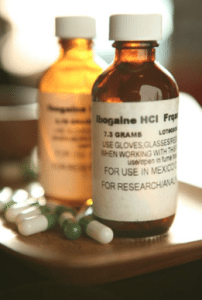
Dr. Martin: Yeah, so the ibogaine is given in capsule form. It’s a white powder. It’s, uh, uh, salt made from the iboga shrub, which contains just ibogaine, which is the principal alkaloid in the iboga.
Dave: Okay. So the take a, a capsule. How much do they take?
Dr. Martin: Well, it’s depending on body weight and depending on the addiction. Um, generally, we’re giving patients anywhere from 16 up to 20 milligrams per kilogram. Um, that is a pretty heft dose, which is a very strong experience. And the reason why we give these bid doses is because we have to overcome the withdrawal from opiates.
Dave: Okay.
Dr. Martin: If we were to use a lower dose then on the subsequent days, they might exhibit some residual withdrawal symptoms, which then we have to, to, to address.
Dave: Okay. I’m considering coming down there …
Dr. Martin: Mm-hmm (affirmative).
Dave: … um, if, if like, if it’s kosher, uh, with all the medical and whatever approvals, uh, because I, I’d like to experience this in a, in a safe setting and see if there were improvements in my life that I wasn’t expecting. Um, if someone who came down, like me, who is not in, uh, uh, not in, in a addiction crisis, what would a typical dosage be?
Dr. Martin: So the dosage that we use for what we call psychospiritual patients, it’s between anywhere from 8 to 12 milligrams per kilogram.
Dave: Okay.
Dr. Martin: And we have a separate program set up for patients who don’t have addictive behaviors, at least not substance abuse disorder …
Dave: Uh-huh (affirmative).
Dr. Martin: … and that is over the weekend. So we try not to …
Dave: Yeah.
Dr. Martin: … mix patient populations.
Dave: Oh, th-, that makes good sense, so my, my biohacking addiction where I keep …
Dr. Martin: (laughs)
Dave: … sitting in hyperbaric oxygen chambers, you can help me with this?
Dr. Martin: (laughs) Correct. If you consider that to be a problem then …
Dave: No, I don’t. (laughter) All right. So, so they come in. They take the capsules. How soon are they gonna start feeling a little wonky?
Dr. Martin: It can take anywhere from 45 minutes up to 2 hours before they …
Dave: okay
Dr. Martin: … feel the effects of the medicine.
Dave: And when does the projectile vomiting start?
Dr. Martin: (laughs) Oh, yeah, patients do experience nausea, but not everybody vomits.
Dave: Okay.
Dr. Martin: And it’s a, it is a movement-induced nausea so it’s a … The, the medicine causes something called ataxia, which is an inability to coordinate body movement.
Dave: Okay.
Dr. Martin: And when patients get up, and they move their head too quickly, then, yes, uh, vomiting can occur.
Dave: So, basically, if you saw me dancing, you’ve seen ataxia, so I got it. (laughter) All right. Uh, so we have people who are gonna be moving slowly or throwing up if they don’t. Uh, then what do they experience?
Dr. Martin: So I think the best person to talk about this would be Deanne.
Dave: All right.
Dr. Martin: She has talked to thousands of people before and after ibogaine, so she can really explain the experience in great detail.
Dave: All right. Deanne, h-, hook us up. What’s gonna happen if we swallow one of these white pills?
Deanne: So, yeah, ibogaine is quite an experience. It has about 4 phases to it; 2 phases, uh, for the first 12 hours. So, typically, when we do the medicine, you’re gonna do it overnight. So you would start maybe around 8:30pm at night, 9:00, something in there. Um, as Martin says, the medicine’s effects will start to hit, uh, maybe within the first hour, but we’re looking at between 2 and 3 hours, um, really escalating up to its peak. The first phase that people move into is what’s called the visionary phase. Um, in the visionary phase, people are going to experience a hallucination with all 5 senses.
So they’ll start, um, feeling or hearing auditory hallucinations, start to see some visual tracers if their eyes are open on the outside. Eyes closed, you’re gonna start to see, uh, visions, kind of like dreamlike visions within your mind. Um, you can start to even smell things, taste things, and feel things that aren’t there, so it’s quite an intense experience in terms of, um, the psychoactive properties of ibogaine. Um, the visionary experiences are more like a dreamlike experience than any other medicine, so when you go into this … And I’ll just say, maybe two-thirds of people see visions, so not everybody sees visions, but of the people that do, uh, they’re dreamlike visions that give a life review in more of a non-linear fashion.
So, again, the best way to explain it would be a dreamlike state where there’s just flashes of images, um, throughout a person’s life. It’s almost like the mental files within somebody’s brain are just being opened up and all of this information, all of these images, all of these memories, um, things that people remember or don’t remember, it could even be things, um, from a past lifetime or from ancestral experiences because we don’t always remember these experiences, and we know we haven’t had all of them, but all of this stuff just starts to unleash, and it’s like watching a movie on the back of your eyelids as you go through your whole, entire journey from birth until where you are now.
And in this experience, you know, your, your body is energetically pulsating and vibrating pretty hard. So you’re laying there still. Like Dr. Martin says, you might feel quite ataxic, a little bit, um, slightly paralyzed. You don’t feel your body. You just lay there still, and the more still that you are, the easier it is actually to relax into the experience. As you lay there, you’ll feel this, like heavy pulsation going through your body, maybe a tingling sensation, sometimes a, a buzzing, um, around your head. You might start to feel a little bit warm, might cycle back between cold and hot. And so the intensity of it is staying relaxed as much as possible mentally and physically, um, through all of these different kinds of hallucinations so that you can be present for the experience.
And in the experience, it’s, it’s very different what comes up for people. But that is a common explanation that people have, is this visionary experience that’s providing ’em a life review that is opening up all those mental files, so they can see where they’re blocked; where there’s unfinished business in their life; where maybe the, um, false belief systems are; the insecurities; the judgments; just all that stuff that we carry that blocks us that we usually don’t have access to. A lotta people will say that they ha-, feel like they’ve had 100 or 1000 hours of therapy in just one night’s work because there’s no, um, third party interrupting that flow. It’s just you inside of your psyche, navigating through the inner workings of your mind.
And in this experience, you’re able to see how you have been conditioned since birth to see yourself, others, and life in a very particular way. And so it’s a very, um, therapeutic experience. It’s self-assisted therapy, really, as you’re in here, the strategies and what we do in our preparation and our training is to surrender the comfort zone so that you can relax and melt into this experience, again, so you can show up and do work with the medicine ’cause there’s a lot of opportunities in these 12, 24, and 36 hours, but you have to be able to settle yourself enough through all the psychoactive properties of ibogaine, which is quite a lot.
Dave: So, uh, it sounds like, uh, quite a trip, so to speak.
Deanne: (laughs)
Dave: The, there are lots of people listening who are philosophically opposed to hallucinogens, um, actually, for reasons I don’t understand. I believe it’s my biology. I should be able to use whatever chemicals I want in my own biology because it’s mine. Uh, but that is a somewhat radical view. I get it. Uh, and i-, first of all, is there any addiction potential for this stuff that lasts for 36 hours, makes it so you can’t move and throws up? (laughs) Like, are you gonna get addicted to ibogaine? (laughter)
Deanne: No, and anybody who does ibogaine will tell you that the, the, that’s not possible. (laughs)
Dave: Yeah, like the world’s harshest masochist could not be addicted to the stuff, correct?
Dr. Dan: Highly unlikely.
Dave: Yeah. Uh, okay. So, so just so that’s really clear, this is not … And, and would you take it and go to a party? (laughter) Exactly. This is so far removed from the stereotype of a hallucinogen. You don’t, you don’t take ibogaine and go on the rollercoasters at Disneyland. Like, it, and it’s, it’s just not what it’s for and, and what, what you do. So there are people who need to hear that who are listening who, who are just thinking, “Oh, these guys are, like, gonna get high and say it’s, it’s for addiction. It, it’s not like that. It, it’s a, a profound experience. But there are still people who say like, “I don’t wanna do something like that,” and there are ways of accessing these states. Like, I’ve done holotropic breathwork with Stan Grof, the guy who invented it. He used LSD with his 10,000 patients until it was illegal, and he replaced it with breathing.
Male: Mm.
Dave: And then there’s float tanks. I have float tank, actually, about 25-feet from me in, uh, here at Bulletproof Labs on Vancouver Island. So how does the, the depth and length, and just … How does the experience of ibogaine compare with, like, floating or with holotropic bre-, breathwork?
Dr. Dan: Eh, I they’re, they all have some similarity. You know, when Lilly first started experimenting with sensory deprivation tanks, uh, he did it as a e-, personal exploration modality. He was r-, really wasn’t even looking at the physiological facts. Um, and all of those methodologies you just talked about, as well as fasting and going on vision quests and doing a whole host of other practices have the same effect, and what are we doing? We’re trying to separate our conscious ego that tries to control everything, we’re trying to s-, to separate that from a deeper, truer sense of who we are, and who we can potentially become when we’re not addicted to a variety of things like work, or sex, or drugs, or distraction, or …
Dave: Or Facebook.
Dr. Dan: … whatever it is … or Facebook, right? Right?
Dave: (laughs)
Dr. Dan: ‘Cause we live in such a busy society …
Dave: Mm-hmm (affirmative).
Dr. Dan: … where trauma is not really held in the understanding of a sacred container that can be duly processed. It, it was, I … I was just reading … So I’m finishing up a book right now, and I asked, um, I just posted out there to some friends, and I said, “Send me some of your most i-, inspiring quotes for stories ’cause I’m, I’d like everybody’s input and w-, we’ll put this into the book. And, um, somebody sent me this real cool story about, um, one of the Rwanda, um, genocide survivors … When there was just mass murder, it was horrendous, and there was UN aide workers that went in for psychological relief work to help people, um, really decompress the trauma. And we, um, a-, in, in our Western view of psychology and trauma and our own mindset about how to dr-, address it, went to go intervene in the spirit of benefit, and (laughs) the, the, the aide workers got kicked out by the …
Dave: Ah.
Dr. Dan: … Rwandan survivors because the story goes, um, these guys, the, you … You sent people to help us, and they, they didn’t, uh, they didn’t have any respect of dance or movement to move the trauma through. They had us sit in cubicles by ourselves with no light, no community, talking about things that made us feel horrible.
Dave: (laughs)
Dr. Dan: It’s kind of … What kind of support is that? We had to kick them out. (laughs) Right? It was like, it was, and it just … It really brought me back to a reflection point of we don’t know what we don’t know. We’re, we’re taught from our particular mi-… Particularly from medical training, we’re taught that trauma looks a particular way, and you treat it a particular way. And so what, what we have the opportunity to do now is to really just have a broad spectrum discussion about: What is trauma? What is personal development? What are the, what are the variety of opti-, options and opportunities to come into a healing experience? What do most people experience in the midst of something that could be described as a hallucinogen or a psychedelic?
But it might be simply something that has tribal custom that’s been used for hundreds, it not thousands, of years for personal relief of trauma, or if you’re not healing from something particularly traumatizing, for at least a spiritual experience that can be s-, akin to an awakening. So it’s not a global prescription, but when you start to look at the data, and you start to normalize people’s experience, um, going through the process of a natural medicine and receiving immense benefit with a relative low side effect profile, when it’s held well, uh, it’s, it kinda th-, there’s no selling that needs to happen; it’s a pretty obvious potential opportunity, and for those that decide to go down that route, for many people, um, it’s, it’s beneficial when it’s legal and offered in a good way because, right now, it’s not legal.
Many of the psychedelic medicines in this country are not legal, so people are finding other means to do them. And that doesn’t mean that you’re stopping the use at all, you know, Chasing the Scream talked about that when, um, Portugal legalized all drugs of abuse, and drug use went down, and crime rates went down, and mortality went down, and overdr-, overdose went down because there, there w-, there wasn’t the war. And then everything that had been spent of the war was put into social infrastructure and education and safe-use clinics and connection. And then, all of a sudden, when you’re connected to your friends and family, there’s no, there’s not as much of a desire to disconnect, which is really what, you know, drugs of abuse do and painkillers do is people are just trying to disconnect from pain, and it’s understandable, there’s a lotta pain in the world right now.
Dave: There’s a study that recently made the rounds where they took mice or rats that were addiction to cocaine and when they started, they said, “Well, they’ll take the cocaine until they die. They drink it from the bottle.” But if you put them in a fun environment with friends, they actually quit drinking the cocaine water and drink the normal water, like, they go off of it.
Dr. Dan: Right. Totally …
Dave: … which is … Like is community one of the cures for addiction, uh, which I, I think you just highlighted there? But you also talked about trauma and some of these other technologies. So we have ibogaine, and we haven’t really dug in on the 5-MeO-DMT that you also use … and we’ll talk about that in a minute … but you talked about fasting and, uh, and things like that. So I’ve, I’ve fasted in a cave in the desert on a 4-day vision quest led by a shaman. I have, uh, electromagnetic, computer-controlled stuff that’ll put you in an out-of-body experience very quickly 8 feet from my head right now. It’s not turned on. Don’t worry. Um, (laughs) but, uh, and I, I do this 40 years of Zen neurofeedback thing where I’ve, I’ve left my body countless times all in the, the course of understanding more about, like, what’s going on inside there.
I started out on this path with, like, tons of trauma. Like, I, I was born with the cord wrapped around my neck, and I’ve re-patterned birth PTSD. And for people to say, “Oh, God. Quit whining.” You know what? Pound sand, guys. Like, that had a profound effect on my life, and I fixed it, but I had to acknowledge that it had an effect in order to fix it. And using hallucinogens can help people become aware of traumas they’re not aware of that are totally invisible, and then when you fix that, or when you become aware of it, then you can process it. And it sounds to me, but not having tried ibogaine, but having tried DMT and having tried ayahuasca, like, there’s a commonality there where they, they let you gain awareness of these patterns that are happening in your body or in your life that are invisible to you and, and … Am I saying this right? Is this what’s actually happening?
Dr. Martin: Yeah, I think that’s, that’s well said.
Dave: Mm-hmm (affirmative). ‘Kay.
Dr. Dan: Yeah.
Dr. Martin: Yeah, it allows you to take a, a different perspective. Um, many patients that come to us have a history of sexual trauma, especially female patients, and ibogaine allows them to enter this state of being an observer in the room where the trauma happened, uh, but without an emotional attachment to the experience, so there’s no emotional pain, but they’re able to see this through the eyes of an adult. So if the trauma happened when they were chen-, children, then that got encoded in a certain way, and they’re able to recontextualize this experience.
Dave: Wow.
Dr. Martin: A lot of the trauma is encoded, um, before the age of 5, so it is …
Dave: Mm-hmm (affirmative).
Dr. Martin: … uh, preverbal, so we don’t really have access to it through normal psychotherapy or psychoanalysis and, and that’s why it’s so hard to, to access these, these memories. But with ibogaine, you’re, you’re really able to go back and even see memories you don’t know you had, um, and really work through them and either forgive, forget, or let go of certain things that are not serving you.
Dave: So I, I know people that, in fact, even family members who are profoundly disturbed by the idea that you might have memories that you don’t know you have. (laughter) How can you have a memory you don’t know you have? It means you didn’t …
Dr. Martin: Mm-hmm (affirmative). Mm-hmm (affirmative).
Dave: … remember it, right?
Dr. Martin: Mm-hmm (affirmative).
Dave: Like, d-, help me understand that or help, or say help listeners understand. I know very well that I was hiding things from myself, but, but for someone who hasn’t experienced that can, can you, like, explain it a little bit better?
Dr. Dan: Yeah, the, uh, the subconscious mind is like a tape recorder, and it records everything. And there have been countless studies that have looked at this through hypnotherapy, and hypnotherapy’s a classic psychiatric resource tool to uncover hidden memories, and it’s sim-, similar to the work of facilitating deep medicine work, like we’re talking about here with psychedelics. Um, it takes a lotta training to know how to do it well, to do it skillfully, to do it with clean energy, with, without trying to shape it, without trying to make anything happen, but just simply being a supportive witness to allowing the experience to come onto the screen so that the person reliving it and healing can see it happen, and like, um, Dr. Palonco said, to relive it from the, the, the place of a more dispassionate observer, and then to have a corrective ex-, experience so that it can be resolved. So we know that much of the developmental, um, psychological framework is set in the persona by the age of, say, 4 or 5. That comes from a mountain of child developmental …
Dave: Yeah.
Dr. Dan: … psychological research in the 60s and 70s. And we know that the language center’s and memory center’s connection are myelinated and formed around that same age of, like, 4 to 5, 6 years old, about the time we go into elementary school. So you have so much of the personality that’s set by, say, 5 years old, and so much of that personality is set in a way that’s difficult to access because the, the brain centers and neuropathways had not yet even formed to allow language for that experience to be held in memory over time. So it’s physiologically challenging to access that. Some people have amazing recall of very early experience, and it’s phenomenal to see that happen. No one’s r-… I don’t, I haven’t seen a unified theory as far as why some people have that better experience. I don’t think it’s, like, because most people have had such shitty challenges that they repressed it. I think some people just have great recall. It’s fairly uncommon.
Most people do not have great recall prior to 4, and so it’s difficult to get into that early stuff, and so it can be, um, amazing to see what is revealed, and you just, you just talked about 2 amazing experiences that you had revealed. Um, and something like flotation therapy can get you to that space because it’s such a deep disconnection. It’s also the first time we’ve been without sensory experience since we were conceived, right, no gravity, no sight, no sound, no temperature, um, so most of what the brain is fielding goes away, and then you have this, like, the, the subconscious has the opportunity to now kind of paint itself onto a blank canvas in a tank. It’s phenom-… Floating is a phenomenal ally for just about any work ’cause anybody can do it.
Um, and so it can be really both fascinating to see what comes up, and it can be scary, particularly if, if somebody has a suspicion that something’s there that they really don’t wanna look at. Well, you’ve gotta be willing to look at some scary stuff to be w-, to, to choose to go into the, the psychedelic work, and usually, again, you know, a lot of the people that we see, particularly at Crossroads that have been addicted to heroin, they’re in crisis …
Dave: Yep.
Dr. Dan: … and they’re at the choice point, like, “If I don’t make an intervention now, I’m gonna die,” right, so they’re already in crisis mode, willing to do whatever it takes to make a significant shift. Not, not everybody’s at that crisis point, so it can be really rocky. And I think that’s why the integration work is even more important. And Stan Grof would talk about that too when he talked about spiral-, spiritual emer-, he wr-, wrote a great book of his life called Spiritual Emergence …
Dave: Mm-hmm (affirmative).
Dr. Dan: … and it was like this spiritual emergency of all of the, the reclaimed trauma that’s now on the scene that, that has the opportunity and the privilege and the requirement to be processed and integrated well, as well as the new self that’s now cleansed, coming onlineand realizing like, “Whoa, holy cow, maybe I don’t wanna live the way of been living, and that means I’m gonna make all these changes that can be kind of rocky.” It, it, it requires a lotta support on the other side.
Deanne: And I think it’s important to mention here, too, with the psychedelics, sometimes when people are in crisis or having a really strong, emotional, um, experiences in their life, it’s difficult to sit down in mediation or even use things like float tanks for the duration that they would need to, to be able to get into that state. And things like the plant medicines like ibogaine, what they allow is that quick entrance into the deepest part of the psyche for people who don’t have the capacity, the mental capacity or the patience to be able to engage in some of these other measures. We all know there’s a lot of ways to access information whether it’s through therapy, or hypnotherapy, or meditation, or float tanks, or so on, but the plant medicine is gonna invite somebody into that space immediately.
Dave: So, so I, I’m relatively well known for saying, “Hurry and meditate faster.”
Deanne: Mm.
Dave: (laughter) Um, which like, “Oh, come on.” But, but here’s the deal; I meditate with electrodes on my head. Uh, that, that’s the whole thing around 40 Years of Zen, and it’s called that because it’s like a lifetime meditation, 7 days. You can put your brain in a state where i-, y-, you probably wouldn’t get there even if you meditated all week, and so I’m, I’m fundamentally lazy. If I do bre-, breathing exercises, I’ll have my heart mass sensor attached, so when I do it wrong I get a signal, and I can do it right, and, and this is just about return on unit of, of effort, right?
So what it sounds like here is that if you’re going to spend 3 days, or 7 days, how-, however long it ends up being, um, really pushing, really working on, on making progress, you could float for an hour a day or 2 hours a day until your skin gets really dry, uh, and you’d get some value from that, and that would be more value than if you sat in a dark room and meditated. But if you went down to Crossroads, and you tried ibogaine in a structured setting or maybe the DMT that you guys use, you might make more progress in the same amount of time. A-, am I saying that accurately?
Deanne: Absolutely, and, you know, I’ll add on that, what’s amazing when you’re in that space is that the information or the messaging that your own self is communicating to you is exaggerated, so it’s such a powerful time to really monitor and observe the different voices in your head that are controlling your daily patterns, your cognitive patterns, your emotional patterns, your behavioral or relational patterns are all stemming from these core beliefs. And when you’re under the medicine, everything becomes magnified, so it’s much easier to draw out the information that you need so that you can see what’s blocking you, and you can see what you need to do to change to move forward. So, yeah, absolutely.
Dave: Okay. S-, so I, uh, for people listening to this, now you’re going, “All right. Like, this is a little bit crazy.” If this is the kind of thing that, that’s interesting to you, then potentially a, a ceremonial healing kind of use of one of these substances might go in your bucket list somewhere, and it’s not easy to do. It’s not cheap, and it’s not fun. (laughs) You might have a peak experience, (laughs) but few peak experiences come without a lot of other work that comes along with ’em, at least in, in my experience. Uh, now w-, how would you know if someone walked in the door, would, would, how would you know? Do you use the ibogaine side of the treatment use, or would you use 5-MeO-DMT?
Dr. Martin: So, yeah, the majority of patients that come to Crossroads are using opiates.
Dave: Okay.
Dr. Martin: Um, by definition, the people that, uh, are admitted into the psychospiritual program, they don’t have substance abuse disorders, but, yeah, we use both medicines.
Dave: Okay.
Dr. Martin: Um, the one that everybody gets is ibogaine, and the one that’s option is 5-MeO-DMT. We do have practitioners that work with 5-MeO-DMT, and that can be scheduled separately, but that would not be at the facility. And the reason why we have the clinic is to have that medical container …
Dave: Okay.
Dr. Martin: … to give this substance safely.
Dave: Got it. So the DMT would be something where you work with an outside practitioner. Okay. So you wouldn’t …
Dr. Martin: You could work with an outside practitioner.
Dave: … stack them on top of each other, which seems insane, but I don’t know.
Deanne: Mm-hmm (affirmative).
Dr. Martin: Well, they’re given, uh, several days apart.
Dave: Okay.
Dr. Martin: They’re not giving together.
Deanne: Mm-hmm (affirmative).
Dave: All right. That seems like that would … You’d probably pick pieces of your brain off the ceiling.
Male: Mm-hmm (affirmative).
Dave: Um, what if you are, say addicted to sugar, which there’s a lotta people overstating sugar triggers the same dopamine receptors as cocaine, therefore, you know, it, it’s that evil. Well, it, it’s actually not very good for you, uh, but I would say there’s probably a difference, uh, because when I put cocaine in my smoothies, it’s a different result than sugar … just saying. (laughter)
Dr. Dan: Are you still using coffee (laughs) at that point? Can, I’d like to answer that just on a personal note if I could.
Dave: Yeah. Yeah.
Dr. Dan: And then, and I think Martin can a-, can, can give you a little bit more, uh, of the back story, too. Um, that was exactly what happened for me with ibogaine.
Dave: Okay.
Dr. Dan: Um, I actually, after my sister died, um, I started traveling, and about 2 months later I did iboga for the first time i-, in Costa Rica, and I did it twice, and it was 40 hours both times …
Dave: (laughs)
Dr. Dan: … and it was r-, a train wreck. It was, like …
Dave: That’s like, that’s like giving birth, like, 40 hours is intense.
Dr. Dan: Oh, my gosh. 40 hours, right? It’s somewhere, it’s, it’s the equi-, it’s somewhere a mixture of feeling like you’re getting rolled over by a steamroller and on a jackhammer at the same time …
Dave: (laughs)
Dr. Dan: … for 40 hours. And so, but needless …
Dave: Aw.
Dr. Dan: … to say, it was, it was profoundly centering (laughs) ’cause, uh, at some point, you just have no other option but to let go and surrender …
Dave: Yeah.
Dr. Dan: … to the process. And, um, about a year later, when Dr. Palonco invited me to come onboard with Crossroads, um, I said, “Yeah, I’d love to know what you guys are doing, and in order to be onboard, I need to experience it so that I understand how you’re, how you’re working with it. So I went down to Mexico, and I did ibogaine. And, um, the next day after treatment, I walked by a plate of fruit and some, I think some muffins or something like that for breakfast, and I walked by it, and I didn’t even flinch. And it was only until I got halfway down the hall that I looked back at that plate, and I realized, “Oh, my gosh, I had absolutely no charge on sugar.
Dave: Yeah.
Dr. Dan: And I didn’t realize I had a charge on sugar until there was no charge on sugar. And then looking back at my life, I’ve had this lifelong addiction to sugar, and it just came up close and personal, and I didn’t go for that. It wasn’t in the forefront of my mind, but I recognized it was gone, absolutely gone the day after treatment, and it stayed gone. Interestingly enough, from time-to-time, if I’m stressed, if I’m sleep deprived, if I’m, you know, traveling a lot, it’ll flair up a little bit, and I, and I notice it because I’m, I’m present to it now. But I didn’t notice it before, and then it’s, it’s the same kind of thing that you just mentioned, addictive neurochemistry is addictive neurochemistry.
It doesn’t matter what you’re addicted to. So the fascinating thing about ibogaine is that it’s, it is an addictive neurochemistry interrupter, particularly for the things that we use that would have a drug kind of effect. Whether they’re drugs of abuse, or alcohol, or sugar, or tobacco, addictive neurochemistry is addictive neurochemistry. Ibogaine’s not necessarily globally effective for everything on the addictive spectrum equally; however, it is impactful for addict-, addictions, whatever they are. And so that’s the personal kind of … because c-, ’cause you a-, asked that question, it was so well stated.
Deanne: Yeah, and I’ll just quickly add, since I’m the one that talks to people, you know, right after the experience and weeks after the experience that many people come in wanting to detox off of something like opiates and discover later on, that they have no more desire for caffeine, nicotine, marijuana, sugar, so we’re seeing a lot of addictions being in-, um, interrupted without even the intention to do so. So it’s that powerful, happening …
Dave: Yeah.
Deanne: … without intention.
Dave: Yeah. No, I’m going to step into, uh, into something here, the difference between use and addiction. So I, I used one milligram of nicotine spray every day or two, and I’ve been doing that for a long time. And I can go without it. I go with it, but it’s a performance enhancing substance. Do you draw a, a difference between use and abuse? And, also, caffeine is a performance enhancing substance … I kinda like it … um, but I go off of it when I’m gonna do intense meditation because it lowers alpha brain waves, let’s say. But e-, where do you guys draw the line between an addiction and a use?
Dr. Dan: I, it really comes down to your ability to willfully control it.
Dave: There you go.
Dr. Dan: So if, if it’s something that you’re choosing to do on a regular basis, and it works for you, like food, water, exercise.
Dave: (laughs)
Dr. Dan: Right? I mean those, we do those every day. They, they work for us.
Dave: Yeah.
Dr. Dan: There’s a beneficial effect. It becomes abuse when it becomes a negative effect and we …
Dave: Okay.
Dr. Dan: … have a hard time willfully controlling it.
Deanne: Yeah, and one of the things I like to talk about with clients, too, is a-, addictions and, um, substance abuse tends to take you towards your worse self; whereas, passions and …
Dave: Oooh.
Deanne: … healthy dependencies, um, tend to take you towards your best self.
Dave: That, that is an incredibly simple lens, and, and I really like that, uh, because I, I don’t know that there’s an argum-… Actually, there is, there’s even an argument for using heroin for your best self, uh, which is probably only halfway offensive to you guys, uh …
Dr. Dan: (laughs)
Dave: My wife, uh, Dr. Lana, is, or she was a drug and alcohol addiction emergency doctor in Stockholm, Sweden. So she worked with heroin addicts, usually ones who were about to die, uh, but went through a lot of the, probably some of the similar kinda training that you had have i-, in your prep work here. And they had an interesting case where a g-, like, the most influential attorney and, like, someone high in the government and some other people had been using low-dose heroin, pharmaceutical grade, for 20 years as an anti-aging substance. Th-, they were using it 3 times a week, very low doses, much like you would use, uh, low-dose naltrexone or something to, uh, to lower … So these people were walking around looking 20 years younger than they should have.
They were buying their heroin from the CEO of a local pharmaceutical company, who made it special for them, and they got busted and all got in big trouble, and it was a big scandal. I don’t know how long ago this was. But, so there’s probably a case for those, for those guys, where even they maybe were going towards their best self even if they were using something that for the vast majority of people would’ve been a complete train wreck, right? So your definition of are you using it to move towards your greater self or are you doing, uh, something else that moves you towards … what’d you call it, your worst self, your not great self, I, I forget … but I, I love that lens ’cause that, that’s like the worst example I could think of, but it still works.
Deanne: Yeah, exactly, and, you know, I think I may have read that f-, from one of Gabor Mate’s books. He does a comparison between addiction and passion, and I believe that’s where I got that from is …
Dave: That’s where you got that from? Cool. Uh …
Deanne: Clarifies that, you know, addiction clearly moves you towards your worst self; whereas, passion … And I just added in there, healthy dependencies ’cause there certainly are healthy dependencies that we need, lie food, are going to move you towards your best self. So this is a measure that we use in working with our clients because they’ll ask us, you know, “Is this a problem for me, or not?” And then we’ll use questions, um, like that to help them identify, “Is this helping you be more productive, uh, more, uh, you know, mentally, um, clear, uh, emotionally stable, and more productive in your life? Or is this causing you to drop the ball in areas of your life and, you know, things have kind of fallen by the wayside?”
Dave: S-, so Deanne, our, our mutual friend, uh, Joe Polish, from the Genius Network, uh, who i-, first introduced us, is doing a documentary on addiction. He’s really working to, to improve the quality of addiction care. And, uh, he just interviewed Gabor Mate, and he, I think Gabor was in Vancouver, so I’m, I’m, I’ll likely have him on this show soon to talk about this, as well, because what I’ve found in my own path and just from working with, with clients and, and just from becoming aware of the way the brain and the mind and, and the whatever you wanna call it, uh, our meat works, is that addiction plays a much bigger role in some people’s lives than they’re aware of, and, and it’s almost, by definition, meant to be subliminal.
By the time you recognize it, it’s probably been there for a while, and it’s probably been causing damage, uh, to your relationships or to yourself or all the other things that it does ’cause it’s sneaky. Uh, and then if we can get a handle on that via whatever mechanism, and we can show people when it’s happening, and let them intervene sooner, l-, it’s actually doing a great service, uh, for humanity. Um, are, are there other technologies, o-, other chemicals, other techniques, uh, t-, transpersonal psychology … I don’t know … other things like that, that you are interested in bringing into what you do before, during, or after, uh, this kind of, uh, this kinda treatment?
Dr. Martin: Absolutely, I mean, there’s, uh, the whole spectrum from brain imaging that, uh, can provide you greater insight and knowledge about what is actually going on; um, then neurofeedback; uh, transcranial magnetic stimulation; uh, direct current stimulation; obviously, flotation, which we’ve already talked about. And then the other interventions, which are not technological but have been proven to work over probably thousands of years. Uh, one of them would be even permaculture. So in ancient times when warriors would come back from, from battle, and they were traumatized, and they had what we nowadays call post traumatic stress disorder, they weren’t allowed to resettle in the villages right away, they were forced to work on the land for a year.
And, uh, just that reconnection with the soil and watching things grow and, uh, it’s tremendously therapeutic, and I don’t think it’s being utilized enough. I mean, in the past, uh, 100 years, we’ve moved away from physical labor and exercise, and we’ve even shut down psychiatric hospitals that all of them had farms and vegetable gardens where the, where the people, the patients would work and work up a sweat and grow their own food. And I think that that was an important component of, of the therapies, but it, it wasn’t recognized. They thought it was slave labor, but, in fact, that was immensely therapeutic. So, um, Dr. Dan can also speak about different technologies. I think he was recently at a conference where they’re, when they mentioned, uh, a bunch of them.
Dave: Oh, cool. Um, do, do share.
Dr. Dan: Yeah, many of them were the ones that, uh, Martin just mentioned. It’s everybody’s new kind of flavor on what, um, magnetic stimulation devices are out there, like pulse electromagnetic stimulation devices or transcranial magnetic, or transcranial direct current, um, um, frequency specific microcurrent …
Dave: (laughs)
Dr. Dan: … and, um, alpha theta brain state technologies, and, actually, they, that’s where you and I … Or w-, that’s where I first heard about your name is, um, working with Jim Hart at the biocybernaut Institute in Sedona ’cause I was living in Sedona at the time. And so I, I had the opportunity at … That was my first experience into EEG directed neurofeedback. And now we’re getting some really cool, sophisticated, um, little briefca-, briefcase, um, devices that will allow you to approximate that same experience. Um, you know, certainly would …
Dave: You, you can leave your body with EEG, unquestionably, if it’s set up right and, you know, you’re in the right place for it. I, I, I was amazed to find that you could do that kinda thing.
Dr. Dan: Yeah. It’s amazing. And, um, photics-, photic stimulation is another amazing one. There’s a Lucian Technology …
Dave: Mm-hmm (affirmative).
Dr. Dan: … um, I think it’s also from Sweden that has this rapid-fire particular pulse rate and intensity of LED light exposure and you’re …
Dave: Mm-hmm (affirmative).
Dr. Dan: … like, look, looking at the LED light plate about a foot away from you …
Dave: Yeah.
Dr. Dan: … and it has this pulse rate, and that, that for me was the most like a DMT out-of-body experience that I’d ever had, uh, before I jumped out of a plane, and then was like, “Whoa, hey, that’s kind of what that feels like.” Um, yeah, so there’s amaz-… And the cool thing, too, about these technologies is similar to what you do, is you stack these complimentary …
Dave: Yeah.
Dr. Dan: … and synergistic tools on top of one another to have an exponentially beneficial effect, and you put yourself in the laboratory and see what the, what the effect is, which is cool. And then you come back and tell everybody else, and that’s essentially the, the definition of a shaman.
Dave: It, it is.
Dr. Dan: Definition of a shaman: Goes to the edge of the known, jumps off, has an experience and comes back and tells everybody else what happened. (laughs) I think Terence McKenna said that.
Dave: Yeah, it’s true. He did say that, and, and there’s a bit of a cyber angle to it now, like, you know, if you’re a, a traditional shaman using, uh, plant medicines, they can arrest you for that. But, right now, you know, if you’re using flashing lights on your, on your eyes, like, man, it’s really hard to write. Uh, (laughs) it’s especially hard to write laws about that given that the lights …
Male: Mm-hmm (affirmative).
Dave: … like, the LED lights in your fixtures right now are flashing, you just can’t see them.
Male: Mm-hmm (affirmative).
Dave: Like, you know, I, I don’t know they can control that, but my experience is that … In fact, one of the reasons that I, I really helped to populize the idea of biohacking is that these things are all over the place, but most people aren’t paying attention to what they can do to put you in these altered states, and, and high performance is an altered state, right? So what you’re saying there is, you know, we, we definitely, we definitely have more control and, and most of those are affordable. Most of those are accessible, and most of those you can do in your garage without anyone’s permission, and then you can talk about what you did without fear of being arrested for it, and that is how progress happens really, really rapidly. And I, I’m expecting to see, like, this huge wave of discovery there be-, because we’re taking this out of the hands of just neuroscience labs, and we’re putting these technologies out there in a way where they, they really have never been before.
Male: Mm-hmm (affirmative).
Dave: Are, are you …
Dr. Martin: Yeah.
Dave: … as hopeful as I am? Or, uh, do you think bad things will happen? (laughs)
Dr. Martin: I’m super hopeful.
Dave: Okay.
Dr. Dan: I’m super hopeful because we never had the opportunity to share this much information …
Dave: Yeah.
Dr. Dan: … like, for example, through podcasts, to so many people about cool things that are hitting people where they’re at, in desperation and in crisis, and they’re looking for something outside the box because the box isn’t working very well. I mean, we can see that …
Dave: Yeah.
Dr. Dan: … in a variety of examples. And, um, and people are thirsty, and it’s a pioneering spirit to be able to reclaim your own choice when you have options and, and to be able to reclaim your best self, and I, I’m extraordinarily optimistic. I think it’s, I think it’s still gonna get a little wonky, um, but crisis is what moves people to change, cris-, otherwise, we kinda get stuck in these, just patterns, or you’re just born as, like, a Psychonaut and pioneering spirit, and you’re always chasing it, like in the Rat Park studies; even though some of the rats … Even though all the rats were kinda hanging out with their rat friends in, in the park, there were still some rats that chose to experiment with coke water, right? So there’s always gonna be somebody who experiments.
Dave: (laughs)
Dr. Martin: You just didn’t have anybody overdosing because it’s like, “Oh, oh experiment. I’d still rather hang out with my friends. I was just curious about what this coke water thing was about.”
Dave: Totally, uh …
Dr. Martin: I’m super hopeful, super hopeful.
Dave: Well, that, that makes me feel good ’cause you guys spend your, your whole life studying this stuff, and I, I spend a lot of time, uh, working on it myself and, and sharing it with a, a small community. But I, I believe that, that having a, a proper background and working with, with very, uh, people just stuck in dark places is going to be more illuminating. Uh, you, you’ll learn more and more quickly than I do working with, uh, you know, with high performers, some of who, in fact, many of whom are using the same sets of e-, chemical and digital technologies to increase their performance without doing the healing work first ’cause they didn’t need the healing work. And there’s another set of high performers who needed the healing work, didn’t know it, started down the high performance path and were like, “Oops, I guess I should remove …
Male: (laughs)
Dave: … that tack in my foot that has always been there ’cause I didn’t know it was slowing me down,” and they go through the act of, you know, removing whatever trauma’s slowing them down, and suddenly they’re accelerating dramatically. A-, and, and that’s one thing I’m, I’m quite interested in, and why I’m considering coming down there for one of your, your weekend experiences, um, is that, you know, I imagine there’s always something I can do a little bit better, uh, or something else where I’m not aware of some nuance in, in my behaviors or in my own self-talk, whatever else it is. And I believe it’s one of the best investments anyone can make is to invest in awareness or more consciousness because you then have more control over the way you treat yourself and the way you treat the other people, and, basically, you have more leverage to make the world a better place. And, and so I, I think there’s a role for ibogaine in, in the work you’re doing and I’m, I’m grateful that you guys have spent all the time and energy putting together something that is very pioneering and, uh, I’m, I think it’s amazing that you’re on the show, too.
Dr. Dan: Yeah. Yeah. Dr. Palonco’s been doing this work for, like, 14 years and, um, and Deanne the same kind of trajectory in regards to the integration work. And it’s allowed us through that time frame, it’s allowed both of them and myself to, to keep constantly building the network of other providers who are sharing the same kind of message. So when you asked me if I’m hopeful, one of the reasons I’m hopeful is because I keep seeing so many other practitioners and medical providers and people from a variety of different tr-, traditions say the same thing about the benefit of helping us all wake up as quick as we can. So we’re all starting to talk more and more about this, the same thing, and it’s what, uh, Rupert Sheldrake would talk about, like the morphic feel is building for this, this rising and this revolution, this Renaissance in medicine to happen right now. I, I think we’re perfectly primed to see it happen relatively quickly.
Dave: Definitely in our lifetime, uh, especially if you extend your life by an extra 100 years through some of these techniques, but that’s a topic for another podcast. I wanna ask each of you the question … Normally, I say “Tell me your top 3 things that you would offer to someone who came to you and said, ‘Look, I wanna perform better at everything in my life, what I need to know,’” but I’ve got 3 of you, so like the genie who gives one wish to each person when there’s 3 people … So 1 answer for each of you, the most important thing you would tell someone who just wanted to be better at being human? Martin, let’s start with you.
Dr. Martin: Reading books, uh, that’s my teacher, and I practice. I, I love to read, um, and where I’ve learned the most.
Dave: Awesome. Dan, what do you think?
Dr. Dan: I, I always come back to the medicines. You know, do the due … Do due diligence to find the best potential experience, do homework, listen to podcasts, interview people, research it, and, and wait, kind of like finding your ideal partner, don’t settle, wait for the perfect …
Dave: Yeah.
Dr. Dan: … time to arise, and, and, and go into the medicine space ’cause there’s n-… I haven’t seen anything for our time, for the Western mind, for the way we live, I haven’t seen anything more effective and more efficient at helping the average person wake up as quick as they can.
Dave: Uh, very, very well said. Uh, Deanne.
Deanne: Yeah, great answers. There’s a lotta ways to answer that. Something that’s really come into my mind for our conversation here and discussing hope for the future is just recontextualizing the way that we see suffering. I mean, right now, when we’re talking about addiction and trauma and, uh, other types of emotional suffering, we tend to see it as an unfortunate circumstance or as a pathology that we need to treat or mitigate. And I think a big thing that we need to do moving into the, uh, new era … if you wanna call it that … with, um, our health and wellness, is to look at suffering as an opportunity. Um, when e-, out of the many years that I’ve been working with addiction, I see so many people still looking at it as a disease and as an illness and as something that we, again, an unfortunate circumstance.
But what I see is this is an opportunity for transformation and suffering is probably a big reason that we came here, so that we could dive deep down into our shadow side and experience that darker aspect of ourself so that we can come back into the re-emergence of our true self. So one of the biggest things I think we can do is look at our suffering and our pain and our problems in a different light. As long as we keep looking at it as something that we are in resistance to, it’s going to continue to grow, and we miss the point of learning and transformation.
But as soon as we step into this light, and we see the opportunity to rediscover ourselves, to better know ourselves, to, um, identify what our place and our purpose here on this planet is, something starts to shift, and no longer are we in resistance to our own selves; now we are in acceptance and that transformation just starts to happen automatically, which allows us to engage more fully in the plant medicines with books that we’re reading or the conversations that we’re having.
Dave: Uh, beautifully well put. Uh, thank you. Now for our listeners, we’re gonna have a transcript of everything we said with links and all that sort of stuff up on, up on bulletproofexec.com. You’ll be able to click anywhere on the transcript, and it’ll take you to that section on YouTube, so you can share just like that 30 second snippet of conversation which is, which is a really effective way to share this conversation or parts that are most effective. We’ll also have links to each, uh, all the relevant websites, but for people driving or, better yet, people sitting in their office, who aren’t driving, uh, who are going to, uh, want the URLs right now, uh, what are the URLs for, for Crossroads, uh, for, for Being True to You and, and the other things we should know about?
Dr. Martin: So the, the URL for the website is crossroadsibogaine.com.
Dave: That’s I-B-O-G-A-I-N-E dot com. crossroadsibogaine.com.
Dr. Martin: Right.
Dave: Okay. Got it.
Deanne: Mm-hmm (affirmative). And then for Being True to You, it’s, uh, just all spelled out beingtruetoyou.com.
Dave: Awesome. Well, Dr. Martin, Dr. Dan, and Deanne, thank you for being on Bulletproof Radio. This is a really profound and I think impactful episode. I really, really am grateful for the work you’re doing, and I, I now how, how much effort goes into taking someone who’s stuck in addiction and helping them come out, so I, I know that you put a lot of your own soul into that kinda work. So keep doing what you’re doing. It makes the world a better place, and, hopefully, this episode also did the same thing. Have an awesome day.
Dr. Dan: Thanks, Dave.
Deanne: Yeah, thank you so much, Dave.
Dr. Martin: Thank you, Dave.
Dave: Bye.
Dr. Martin: Bye.
Dave: If you liked today’s episode, you know what to do. Go out there and do something nice, and one of the things you could do for yourself is you could head on over to the Crossroads website if that’s something that appeals to you and check it out. Maybe you’ll do it. Maybe you won’t. Uh, but I didn’t mention this at the beginning, I have no deal with these guys. I’ve never been down there. Uh, it just seems like a very interesting group of people and interesting stuff. Uh, so there, this isn’t, like, a referral, affiliate thing. It’s just knowledge, and if it was an affiliated thing, I would’ve told you ahead of time.
The other thing you could do is, remember that Bulletproof Cacao Tea I talked about? Think about picking some of that stuff up. It’s got theobromine in it, which is a core part of what’s in chocolate, and it’s delicious, and you feel great when you’re done drinking it. So I’m, I’m a big fan of that, especially during winter when I don’t really want, like, the hot chocolate we have. I just want the chocolate flavor, like a hint of that. I’m, I’m really feeling happy with that stuff lately. It’s, it’s been kinda making me feel good and whatever, so have an awesome day.
What You Will Hear
- 0:00 – Cool Fact of the Day
- 1:47 – Casper Mattresses
- 3:00 – Intro
- 6:42 – Ethics of rehab through psychedelics
- 12:24 – Is Ibogaine strictly for addicts?
- 16:00 – Crossroads Treatment Center
- 19:53 – The Ibogaine experience
- 24:45 – Alternatives to Ibogaine
- 32:05 – Uncovering trauma and unknown memory
- 42:11 – Ibogaine vs. DMT treatment
- 48:10 – Addiction vs. use
- 56:25 – Future of alternative medicine
- 1:01:38– 3 recommendations for kicking more ass and being Bulletproof
Featured
Dr. Martin Polanco and Dr. Dan Engle
Resources
Casper Mattresses code: bulletproof
Bulletproof
Questions for the podcast?
Leave your questions and responses in the comments section below. If you want your question to be featured on the next Q&A episode, submit it in the Podcast Question form! You can also ask your questions and engage with other listeners through The Bulletproof Forum, Twitter, and Facebook!
Source: Bulletproof