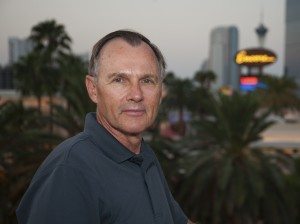

Why you should listen –
Philip Reed is a multi-platform author, writing about a variety of subjects in a simple and compelling style that changes people’s lives. His sports series is about performance under pressure in basketball, golf and blackjack and his latest book is “Wild Cards, A Year Counting Cards with a Professional Blackjack Player, a Priest and a $30,000 bankroll.” On this episode of Bulletproof Radio, Philip sits down with Dave to talk about counting cards, cognitive enhancement in the casino, working memory, the importance of mentorship and teamwork, performance learning curves and more. Enjoy the show!

[embedded content]
Podcast: Play in new window | Download
Follow Along with Interactive Transcripts!
CLICK HERE to read the transcript and easily share your favorite excerpts with friends!
Click to hide transcript
Click here to download a PDF of this transcript
Intro: Bulletproof Radio. A state of high performance.
Dave Asprey: Hey, it’s Dave Asprey with Bulletproof Radio. Today’s cool fact of the day is that your amygdala is part of your brain that’s very, very old, is the culprit about why you vividly remember all your fearful and embarrassing events. Your amygdala not only releases adrenaline and cortisol during those fearful events, but it also temporarily triggers your enhanced memory functions in your brain. So, basically scaring the crap out of yourself, just about guarantees that you’re going to remember it.
Speaking of remembering things, if you haven’t had a chance to check out Choline Force, which is a Bulletproof product. It’s worth checking out. It’s something that I put together to give you sharper focused energy, crystal clear thinking, better memory, and to amplify the levels of acetylcholine, which is a key neurotransmitter. It also has some micro-nutrients to enhance micro-circulation in the brain. There are lots of ways to increase acetylcholine. I stacked a bunch of up in there for you, and if you take that in the morning with your Bulletproof coffee, you can expect even more focus. It’s a pretty amazing stack when you get it all down. So, that’s Choline Force, on the Bulletproof website.
Today’s show is also going to talk about brains, and guts, and a little bit of fear, and a few other things like that because we are talking with an author who’s published two hit sports books and three novels. He’s a former police reporter and you might have read his work on Edmunds.com. But, what’s really cool is that he’s also the most recent author of “Wild Cards,” a year counting cards with a professional blackjack player, a priest, and a $30,000 bank roll. Our guest’s name is Philip Reed. Philip, welcome to the show.
Philip Reed: Good. Good to be with you, Dave.
Dave Asprey: Where the heck do you find a priest and a $30,000 bank roll? Because I got to know.
Philip Reed: Yeah. Well, you know I’ve had one of these lives where a lot of interesting and miscellaneous things have come to me. I think if your mind is open to these things, they will come into your lives. But, it seems like when I want something, or something new to happen, things magically appear.
Dave Asprey: Yeah.
Philip Reed: It’s been happening my whole life. It doesn’t happen on schedule, and it also doesn’t happen in the quantities that you would like sometimes, but it does happen. So, I was looking … I was actually writing a novel and I wanted one of the characters to be a card counter. I had never learned to count cards, all though I had always been kind of fascinated with the concept of an individual beating the casino. You know, the David and Goliath scenario.
Dave Asprey: Yeah.
Philip Reed: A friend of mine that I met through the golf book, he’s a long drive champion, the same as Jacob Bowdin. He’s a swing speed trainer, teaching people to swing faster, not harder, or building their muscles, but faster. Anyways, he was invited to go to Las Vegas and give a golf lesson to a professional blackjack player. So, after that, he came to my house and he was so pumped up. He said, “you’ve got to write a book about this guy.” He brought the MIT blackjack manual, kind of a tattered photocopied thing.
Dave Asprey: Yeah.
Philip Reed: It sat there on my desk for three or four weeks because I was almost kind of afraid to open it, where it might lead me. Finally, I didn’t have anything to read and I opened it. I started reading it and I thought, “you know, I could do this.”
So, I called the guy up and his alias is Bill Palace. Almost all of the blackjack players have aliases. We talked, and he wasn’t at all what I imagined. I imagined that he was going to be like some swashbuckling sort of flamboyant guy like Rhett Butler or something, you know? Instead, he was a lot more like a business man. He said, “yeah, I can meet you in Las Vegas.” He said, “I usually travel with a priest from my diocese. He plays video poker, I play blackjack. He kicks in some money, and we play out of a bankroll. So, if you want to come meet us, let’s do it.” So, I had to check it out and that’s kind of how the thing got rolling.
Dave Asprey: Okay. That’s actually kind of an amazing story when you think of about it. You just ran into the guy and it’s actually bankrolled by a priest. Is this like collection plate money? How does this work? That “the lord shall provide” sort of thing?
Philip Reed: Yeah, well it’s interesting. If you have a bigger bankroll, you can play at a higher level. It makes everything better, because you can win faster. You can sustain the downturns better. You can play in the high limits areas. So, yeah. I mean, the priest doesn’t have a lot of expenses. He takes the extra money and invests in Bill, and then Bill in me. So, we were able to play at a much larger bankroll.
But, I mean Bill at one point, he said to me, he was checking out two deck games in the area that he lives. So he went to the priest and said “I found a good two deck game,” and the priest kind of thought it over. You know how priests are very thoughtful.
He said, “okay, I’m in for a grand.” He said, “stop by the rector and I’ll have the money in an envelope.” So, behind the scenes, there’s this money changing hands.
Dave Asprey: I’m truly amused, but what you’re doing there, regardless of where you get the money, is you’re talking about performing under pressure.
Philip Reed: Yeah.
Dave Asprey: I think all of your books have that element about it. I used to live in Lake Tahoe. I had a place there when I first left Silicon Valley, and I would go and I would count cards in blackjack. I experimented with different mind altering substances and I was never an amazing card counter.
Philip Reed: Yeah.
Dave Asprey: But, the difference in what you take home, even if you’re kind of a crappy one, is just phenomenal. Your $5 hands become $50 hands all of a sudden at the right time, and magically good stuff happens. The pit boss glares at you.
Philip Reed: Oh yeah. Well, there’s that. Then it turns into a whole different game.
Dave Asprey: Yeah.
Philip Reed: It becomes evading detection. But yeah, absolutely. There’s a lot of people I talk to and they like to play blackjack, and they say, “I could never learn to count cards.”
I say, “well, just look. When you see a flood of low cards come out, you better raise your bets for the next hand, because the high cards are coming and you’ve got a better chance of winning, you know?” So, yeah, absolutely. I mean, of course card counters become really obsessed with being absolutely perfect.
Dave Asprey: Yeah.
Philip Reed: And learning all of the index numbers and everything, but it’s not a perfect game. There’s the element of luck is still huge. Even when you’re perfect, you’re only playing at about a 2 to 4 percent advantage.
Dave Asprey: I found that I go into a state of flow where when you’re really paying attention to the cards, you sort of just look and you just absorb the information. I did find that what I ate, and particularly modafinil, one of the smart drugs, well known, I took it almost every day for 8 years. I would take an extra dose of it before I would go count cards, and card counting was … it was effortless on that stuff.
I don’t take modafinil on a regular basis anymore. I haven’t had it in a very long time, because when my biology’s dialed in, my brain just works like that anyway. But when my brain wasn’t dialed in all the way, it gave me so much more effortless focus, and it’s that effortlessness that matters. If you have to struggle to count all … look at all the cards on the table at once and run a tally in your head, that struggle takes you out of the flow state. All of a sudden you don’t remember what you’re supposed to do, and you miss your bet, and you do something that’s not going to work.
Philip Reed: Yeah. Well, there’s so much that you really need to pay attention to when you’re counting cards. The cards are really just the beginning of it because you need to keep the count, you need to watch your bets, but you need to watch the dealer. Then, you need to watch the pit boss. You need to find out, are they getting calls from surveillance?
So, when I first started with counting cards, it was like I was looking at the table through a telescope. All I could see was the cards. The whole rest of the casino disappeared. But then, as I got better and better, my perspective broadened. And I think that this is true probably of all sports, like you’re playing soccer, you need to know who’s around you, who to pass to. You need to see how the ball is spinning. I mean, there’s so many things that your brain is processing and the better you can process it, the better you can play.
I discovered and began an experiment … I mean I’m a big coffee drinker, so naturally I was drinking coffee to get to the table, but sometimes you can overdo it with coffee.
Dave Asprey: Yeah.
Philip Reed: Because you go through, I think, more peaks and valleys with coffee than modafinil.
Dave Asprey: It depends on what’s in the coffee, too. I was tired of the valleys.
Philip Reed: Yes. Yeah, well I know and I wish I had had the Bulletproof. That would have been a really interesting test to see whether there was that kind of the drop off, and I would really … because counting cards is like a really, really good test of your ability to process information quickly, reliably, and it’s also a good test of your short term memory.
Dave Asprey: We found statistically significant improvements on 6 of 7 measures of executive function testing black mold free Bulletproof coffee beans against a selection of store bought beans in a study that I published in the Bulletproof Diet. These were university validated style 15 minute tests, if I remember right, twice a day. So, we were kind of going deep to figure out, “all right, is something really going on here?”
Philip Reed: Right.
Dave Asprey: Just better vigilance, right? If you loose that edge for one second, you might miss a card. But, I imagine some people listening probably don’t know much about card counting. They just kind of know it’s cheating. Well, sorry, using fire to stay warm is also cheating against your neighbors who don’t have a fire, so.
Philip Reed: Right.
Dave Asprey: We can talk about that later. But, what is card counting? If someone walked up, said “I have no idea what you do. Can you walk me through what it is and what it’s like?”
Philip Reed: Yeah. Well first of all, there is a perception that it’s either cheating or illegal. It isn’t illegal, but you can get kicked out, because the casinos can read you the trespass act and then when you go back in, you’re 86ed, as a matter of fact. An interesting term that came from the proof of whiskey.
Anyways. Well, supposedly if somebody was drinking 100 proof and they were acting out, they’d give them an 86 because it was what they served women in the old west. So, people didn’t want the perception of being 86ed.
So, anyways. It’s a little bit of a misnomer when you say counting cards. People think “wow, how can you count all those cards or memorize the deck?” And, you’re not doing that. Basically it’s a system which has been designed to help you track cards and figure out, are there more high cards or low cards in the deck that you’re about to play. So in other words, it’s what they call a dependent sequence of events. You’ve seen half the deck, and let’s say there were a lot of little cards in half the deck. The second half of the deck is going to be hot, because the ten cards and the aces are what’s good for the player. Because, you can be literally dealt a 20 or a blackjack, whereas the dealer, if the dealer gets a 14, he still has to hit and then bust.
So, high cards are good for the player, low cards are good for the dealer. Once you know that, and you know the way that the deck or the composition of the deck which is coming, you can then know when to raise your bets. I mean, it’s really pretty simple because it’s like telling you when to raise your bets. So, you want maximum money when the deck is hot, minimum when the deck is cold. That’s it. I mean, it’s really pretty simple.
Dave Asprey: That was my understanding. I didn’t study the science in advanced levels, but you can read about it on Wikipedia.
Philip Reed: Sure.
Dave Asprey: There’s tutorials. There’s games you can play on your iPhone that will show you exactly how to count. There’s various systems, some are more complex than others.
Philip Reed: Right.
Dave Asprey: But when you do a relatively simple one, it still tilts the odds in your favor.
Philip Reed: That’s right.
Dave Asprey: I don’t know how many nights I played when I lived in Tahoe. I didn’t become obsessed with it, but you could go down, and you could pretty reliably … I go there, I’m willing to lose $200 bucks.
Philip Reed: Yeah.
Dave Asprey: That is entertainment money, so it’s okay if you lose it. You would have spent that on a show and dinner anyway. So, you go, you spend $200 bucks, and surprisingly often, I’d walk away with a thousand dollars at the end of the night, which is kind of cool, right?
Philip Reed: You know, it’s so amazing to win money. It’s almost like you’ve created money out of nothing, you know?
Dave Asprey: Yeah.
Philip Reed: But the real kicker is if you use your brain to win money, then you feel smart, you know?
Dave Asprey: It’s good for the ego, right?
Philip Reed: Yeah, and part of the book that I wrote was about wanting to feel smart. Now, I’ve been reasonably successful as a writer, and other things. But, I never really felt smart. My father had a PhD, he was a chemist, and an inventor. He worked for MIT. Other people in my family, they just were really quick in a way that I didn’t feel that I was.
So, when I turned 59, I was thinking I need something to keep my brain sharp and everything. So this opportunity came along and I thought, “well, here it is. I need to prove that I can do it.” I think a lot of what I learned was that so much of that being smart is really preparation. It’s hard work. It’s studying, and all of those things. Then, when you need it, the ability to perform under pressure. That became a fascinating part of this book, too, because I think really almost anybody could get used to doing anything if they did it enough, if they gradually ramped it up.
Like, I know you’ve done a lot of public speaking and so on, did you have a learning curb about being in front of the camera and things like that?
Dave Asprey: There’s a total learning curve. In fact, people wouldn’t believe it, but I didn’t have any idea how to interact in a crowd. I had all the signs of Asperger’s. I wasn’t formally diagnosed but I was diagnosed with ADD. I had all these behavioral things. So, in my very early 20s when I first moved to Silicon Valley, every Thursday night I would hang out at this business networking thing and just watch what people would do and try and copy it.
Philip Reed: Yeah.
Dave Asprey: Until I can figure out like how you play the game. The first time I went on stage, I knocked them dead but I was completely panicked. I was in this complete flow state, I have no idea what I said, but everyone clapped at the end, and They laughed, and it was good. That was how I kind of launched it, but I talked for five years, four nights a week, to get good at public speaking because I wasn’t good at it.
Philip Reed: Right.
Dave Asprey: I put in the time. So yeah, the learning curve was actually pretty steep for me, I think.
Philip Reed: Yeah, mine came about because I wrote a number of novels and maybe fifteen years ago they still did book signings. So, I would go and speak to small groups and then I spoke to larger groups, and larger, and larger. Then, when I started working for Edmunds.com, they occasionally would put me on national television. You’d sit there in the dark room, and they’d say “okay, this is live.” So, you can’t screw up. Luckily, I had the background where I knew that if I opened my mouth, something reasonably coherent would come out, but I never knew what it was going to be, you know? That’s actually, if you learn to trust yourself, it can be pretty exciting.
Dave Asprey: It’s really unnerving that the first time I did that, it was for CNN. They said, “oh can you be on TV to talk about smart drives?”
I said, “sure. I believe these can help so many people. I’m happy to do it,” and they flew me to San Francisco. I’m expecting a studio, and you walk in, it’s like I’m talking to the Terminator. There’s just like a room, there’s no one in there. There’s a red light, and a lens.
Philip Reed: Yeah.
Dave Asprey: And, there’s a guy behind the glass. To be on live TV talking to a wall. I knocked them dead, right? But, I did a bunch of meditative stuff ahead of time because it’s very unnerving. So, you pulled that off as well.
Philip Reed: Yeah. Now, it sounds like we’ve taken kind of a similar journey because almost all my adult life, I’ve been researching ways not to get nervous, or to be able to handle nervousness.
Dave Asprey: Yeah.
Philip Reed: People who say, “I’m no good at public speaking.”
I’ll say, “well, you get nervous, right?”
They’ll say, “yeah. I get so nervous.”
It’s like, “well, I do too!” And, here’s what I did. In the early days when I was still a runner … Of course if you run far enough, then you get that endorphin.
Dave Asprey: Right.
Philip Reed: That would really smooth things out, because you get in front of a crowd and you just all of a sudden get this wave of nervousness that almost overcomes you. Overwhelms you. But, if you can get past that, then you get to this really exciting place, too. That’s where a lot of people never get to, which is a shame because it’d be nice to hear what they had to say.
Dave Asprey: Yeah. It’s a practice thing. Now, I know that I’m serving the audience and I’m there for them, and I love going on stage. There’s no fear at all, but it was a multi-year thing where you just have to learn. I’m guessing, I never got there with card counting. I was never nervous about it. I’m like, I don’t this for a living. I have no fear of being kicked out of the casino. If they kick me out, I just don’t care.
Philip Reed: Yup.
Dave Asprey: All right, so they never did, and maybe it’s because I wasn’t that good. But, I do know that when my bets would go from the 5 to 50 or 100, or I’d bet four things on the table at once. Like the real obvious signs that this guy’s counting cards. I would just act a little drunk the next one.
Philip Reed: Yeah.
Dave Asprey: Maybe they believed me.
Philip Reed: Card counters always need a good cover. You’re in a casino. The drunkenness is a good cover. Yeah, for me, well what happened was I started traveling with Bill and he’s a very high level player. So, first time we went to Las Vegas, I’d barely played at a casino at all and he said “bring $2000.”
I was like, “that’s a lot of money for me.” First time I sat down, I played, I lost $700. It was like, somebody slugged me in the stomach, you know? But, what I didn’t realize was that’s the price of admission. You’re going to take some hits, but you’re also going to get some really big wins. A couple times I sat down and won $1500 bucks in 5 minutes.
So, you know you have to understand the process and it took me a while to … I mean, my hands would shake, I could feel my hands sweating. My mouth would get really dry. All the signs of acute nervousness, and it was the nervousness of being an intimidating atmosphere and also the threat of really losing large sums of money in a very short amount of time.
Dave Asprey: So how much did you end up making your first year when you started counting cards?
Philip Reed: Bill and I, and the priest, of course, traveled and we went to Las Vegas, Biloxi, Tunica. I took a cross country trip in an old car and I played in every casino I could find.
Dave Asprey: Cool.
Philip Reed: So, at the end of the … Yeah, it was a great, great trip. At the end of the year, I had $6,100. So, I think that that’s good proof that the system works.
Dave Asprey: Yeah, $6,100 after paying for gas?
Philip Reed: Yeah, well it was … Well, that’s another story. Yeah, it was a project that I did for Edmund’s, so.
Dave Asprey: Oh okay, cool. So you were already cruising around, anyway.
Philip Reed: Yeah.
Dave Asprey: So, it was a road trip and you were having a good time.
Philip Reed: Yeah.
Dave Asprey: And you managed to work this in. So, okay, $6,000 is not shabby at all.
Philip Reed: Yeah.
Dave Asprey: And you got to have fun doing it, too, right?
Philip Reed: I had a lot of fun. One of the things, too, is that the risk is part of it. It’s exciting. I’d take a beating, then I’d go home and I’d say “I’m never going to do this again.” Two or three days later, it’s like “hey, when’s the next trip?”
Dave Asprey: Yeah, risk is the spice of life, right? Every time I see these ridiculous things, you know, ‘safety is job one.’
Philip Reed: Yeah.
Dave Asprey: It’s like that’s a Ford slogan or something. Actually no, getting my ass there is job one. Safety is not job one, because if safety was job one, we shouldn’t be driving, now should we?
Philip Reed: Yeah to be honest.
Dave Asprey: I’m starting to get a little upset with that on like, the world anti-doping. “Well, it’s all about safety!”
I’m like, “you of all people would run into each other head-on and cause concussions in 96% of them,” but they can’t use testosterone when they’re getting old to stay young. How messed up is that?
Philip Reed: It’s an incredible double standard.
Dave Asprey: Yeah.
Philip Reed: On so many levels. But, some of that is changing, I hope. But, it changes very slowly. It’s terrible. But yeah, the risk was … I mean, one of the discoveries it sort of came by talking to the priest. I said, “I think all of these casinos are built by greed.”
He said, “no it’s not greed.” He said, “it’s risk, because it’s risk that puts us in the moment.”
Dave Asprey: Yeah.
Philip Reed: He said, “you know, and that’s why we watch sports. You know, you hear the crack of the bat and is it going to be a foul ball or is it going to be a grand slam? For that moment, you’re completely suspended; and you know, if you’re playing cards, you’re not going to be thinking about ‘where did I park the car?’ You’re completely in the moment.” And, I guess that’s becomes pretty addictive. That’s probably part of that compulsiveness of a lot of these things. Because they say like, base jumpers and those high risk ultra-sports people … In fact, I think did you recommend the book, “The Return of Superman?”
Dave Asprey: Absolutely. Yeah, in fact Steven and I have hung out many times. He was a keynote at the second annual Bulletproof conference.
Philip Reed: Yeah. I read that after we talked, and because I’ve been meditating, and you know you’re always trying to get to that place where you’re really in the moment. The revelation of that book was that when you do these extremely dangerous things, it puts you into the moment. You have no choice, you know?
Dave Asprey: I have a 26 foot tall tree where we needed to take the tree out, so we cut off the top of the tree. It’s about this big in diameter. For people who are driving, it’s about I don’t know, 18 inches, 24 inches in diameter. I put a ladder on the side of it so I could climb up the tree and stand on the top of the tree to meditate. The flagpole meditation. Why do they do that? You do that because it puts you … like, if you fall down, you’ll die! So then, you’re really in the moment when you’re meditating.
Philip Reed: Yeah.
Dave Asprey: And, it also makes you put your visual field … that you can’t focus on a spot right next to your feet. You have to focus on a spot a mile away. When you do that, it expands your sense of self very dramatically. I used a safety harness so it was just going to hurt if I fall.
Philip Reed: Yeah, but still.
Dave Asprey: But, same thing. You got to have something that’s going to make you do it.
Philip Reed: Yeah, yeah, and I think of myself as being a risk averse person, but I think this book kind of changed that. There’s so many people that said, “oh, that sounds cool. Maybe I’ll try it,” and then they look into it, and it’s like, “there’s no way I’m doing what you did,” you know?
I mean, I don’t think of myself as a hero or anything, but I just had a unique opportunity and kind of rode it. Because, I had a lot to learn from Bill. It was an opportunity to try to peer into his head. I was struggling to learn card counting and all of that, and I wanted to know why is he so good at it? I mean, the perception, of course the Hollywood perception … “oh, if you’re a genius, you can count cards.”
Dave Asprey: It doesn’t require genius at all.
Philip Reed: No.
Dave Asprey: It’s like adding ones and twos. It’s really not hard.
Philip Reed: No, no.
Dave Asprey: But, it is hard to pay that much attention, but it’s not an intelligence thing, right?
Philip Reed: No! No, not at all. First of all, people who say “well, I’m not good at math.” Well, the math has been done for you, you know?
Dave Asprey: Yeah.
Philip Reed: When computers came in, what they did was they would just take every card combination that you could get and they put it into an IBM computer, at the time, and played a million hands. Then they said, “hitting 16 against the dealer’s 10 wins 53% of the time.” So, that was how it was done, yeah. Do the mathematically correct thing. So you don’t have to be using formulas or … but you do need to have good short term memory. You need to be able to hold count in your head despite the fact people are talking to you, new people are coming in and out of the table, all of the distractions of the casino. That’s what becomes difficult.
Dave Asprey: I’ve done a lot of work with software on training working memory. In most people, you can double working memory in about 20 days but, the training is so uncomfortable because of the sense of failure, that it’s just it’s all over you. I’ve had billionaires just fail at doing this, like clients where they’re like, “I’m not doing that. But, I’ll have the 22 year old that works for, because I can make him do it, because I pay him to do it.”
Philip Reed: Yeah.
Dave Asprey: Like, “it does work, but I’m not going to do it,” because it’s so stressful. What you’re doing though, is you’re putting yourself in a situation where there’s high stakes learning. Not high dollar stakes, but for the brain, money, survival, they’re all tied together at the lowest levels.
You’re basically telling your brain there’s survival, there’s big opportunity, there’s that element of risk which is a huge reason to grow new neurons. So then you’re putting yourself in an environment where ability to pay attention becomes a paramount importance when there’s a big threat. I think that causes more rapid neurogenesis where you actually are going to grow, first new synapses, and then malonate the synapses and then it should become effortless.
Philip Reed: Right, right.
Dave Asprey: Is that your perspective? I’m making this up, but that’s my experience of the world.
Philip Reed: Well, I think the brain is a tool that is waiting for you to tell it what you need. Then, it will go in that direction, and I think the brain is also a mechanism for survival. So, what you were just describing was basically sensing danger and building a system to cope with that danger. I think that the brain is really good at that if you let it do it’s thing. I think it knows more than the conscious mind does.
I found that under pressure, there was a time when I wasn’t really performing, and then I got better under pressure. That becomes interesting and I think that the world’s top level athletes know about that. They need it. First of all, people resist the pressure, then they come to really almost feed on it. It’s like who wants the ball at the end of the game?
Dave Asprey: Yeah.
Philip Reed: It’s the person that thrives on pressure.
Dave Asprey: When you were in school, did you wait until the last minute to study or write a paper?
Philip Reed: I just did that. I turned in a story and it was right at the end, and my editor said, “well, that’s what I expect from you.” I’m apparently what they call a ‘cliffhanger.’ I don’t wait … I don’t start on it until I have to. Then, I do it right at the last minute. I have a strong belief, according to a survey I took, that I perform best under pressure. It kind of helped to know. Now, the interesting thing was my wife took the survey. She’s complete opposite: starts early, studies hard. All those things never really worked all that well for me.
Anyways, all of our brains are different. I mean, that was what was so much fun about writing this book. It was like, you know, I learn in a very different way, but I think I’ve finally figured that out, and I made it work. I wish I had found it out earlier, but that’s the way it goes.
Dave Asprey: Yeah. Everyone’s brain is different, and finding what works for you is so important. For you, card counting seemed to work maybe because you’re one of those last minute people. What did it do for your brain health? Did you see changes in your cognitive abilities when you became good at counting cards?
Philip Reed: Yeah, well I started the book when I was 59. I’m 63 now. It was at a time when a lot of my peers were saying things like, “oh my gosh, I forgot that name. I guess I’m getting old.” Buying into the whole thing, and I think that’s one of the things that made me write the book.
Dave Asprey: Yeah, don’t buy into that. It’s a bunch of crap. Their brains are failing because they need the right nutrition, the right anti-aging therapies. There’s no excuse for that at any age.
Philip Reed: No, I think you’re absolutely right. But, there’s a kind of collective aging process where you look at your peers and you know, “yeah, yeah, we’re old.” Get together, and they all complain together. But, I think the interesting thing, Dave, and I’m sure this is fascinating for you, but you have your good days when you’re really on top of things and everything’s right on the tip of your tongue. Then, other days where it just doesn’t seem to be happening. Is it what you ate last night? Is it how you slept? It’s probably a combination of a lot of those things.
So, this was a good examination of really optimizing performance in a way that was impossible to escape. It wasn’t like giving a speech and saying, “well, that was pretty good,” afterwards. I mean, you go away from the table and you either won or you lost, you know? That’s a pretty clear division right there. Also, having something at stake all of the time.
Now, what happened was it was a great opportunity because I was 59 and I took a sabbatical from my job, and I had 4 months. So, I spent a lot of that time learning card counting but I was also studying Spanish. I went down to South America and I played blackjack down there.
One of the things, too, that was fascinating about this book. I mentioned my father was a PhD, scientist. I have a son who’s a musician and he’s extremely good with languages. So, there’s that kind of commonality of language, and music, and also he’s very good with … I taught him how to count cards. He doesn’t have a bank roll. I mean, that’s a big stopper right there. He clicked with all of those things right away.
But, I kept saying to myself, “his brain is so different than mine. He got this from his mother.” That was kind of the … it was humbling. But, I think that if you learn to work with your brain, then you can … The problem is that the school system is so rigid in the way that it teaches and rewards.
Dave Asprey: Yeah.
Philip Reed: The reward part of it is so big, because the message I got from school was, “you didn’t do well, you’re not going to do well in life.” So, get good grades.
Dave Asprey: The school system does weird things for sure. I remember way back in the day, about 20, 20 or so years ago, I was the only student in the university who had a laptop. It was $5,000 that I didn’t have. I put it on three different credit cards, and lugged this 12 pound behemoth to class, because I could take notes on it, and my notes were actually legible and more coherent.
One semester … and, I wasn’t a great student at all, according to my GPA. So, one semester, I’m like, “I really need to get done with college thing, so I’m just going to do two semesters in one.” So, I doubled my course load. That thing, working under pressure, right?
Philip Reed: Yeah, yeah, yeah.
Dave Asprey: I used a laptop and what I found is if I played free cell, like the dumb little solitaire game?
Philip Reed: Yup.
Dave Asprey: That one that comes with Windows 95? Windows 3.1, I guess, back then. I would play that during class, and then I would switch over, take notes, and switch back, that I got a 3.9, highest GP I ever got, and it was because my brain never shut down. Of course, everyone in class was really offended. “How dare you play? It’s disrespectful!”
I would just look at them like, “how dare you look at my screen, it’s private!” Right?
Philip Reed: Yeah.
Dave Asprey: I would just do this, and pretty soon the other really smart guy in the class would sit next to me and we would collaboratively play. Both of us were like acing everything, because our brains were the kind of brains that were like “is this all?” It just kept the brain busy so that it would keep paying attention. It was like the information would just flow in. Okay, that worked for me, but the person next to me probably would have just gone insane if they tried to do that. So, school there … I wasn’t supposed to be doing that, but I didn’t care. I just did it.
Philip Reed: Yeah.
Dave Asprey: And, I was lucky I found it. But for everyone like me, there’s probably 20 other cognitive styles that are completely crushed by the time you get into university, if you even can afford to go.
Philip Reed: That’s true. I think that the only real gift that I had was self confidence.
Dave Asprey: There you go.
Philip Reed: So people would say, “you can’t be a writer.” I would keep trying anyways. Eventually that trumped all of the other stuff because I found a way to do the things that I wanted to do. But you’re right, I mean people do get crushed.
They listen to their professors, and their professors said … Like for example when I was just about to graduate from college, one professor came to me and said “you know, you’re a pretty good writer. You should maybe make a living doing this stuff.”
Another professor came to me at the same time and said, “your writing is terrible. If you really want to graduate.”
So it’s like, here’s two experts. One’s telling me I’m good enough to make a living at it. So I guess I paid attention to the one that liked my writing. But, maybe there’s something inside all of us that kind of guides us and gives us sort of a sense of what you’re good at.
I mean, there’s the word “destiny” which is really a big word, and tied to so many things. But, I really wanted to be a writer, I really loved exploring new things, and I think as a journalist, my curiosity became probably one of my best tool, qualities, tools.
Dave Asprey: So, you applied your curiosity to counting cards, but you also hooked up with a mentor, which is one of the more powerful ways to learn something quickly.
Philip Reed: Yes.
Dave Asprey: What could Bill Palace, your card counting mentor, what could he do? What were his mental abilities? Just paint me a picture of that.
Philip Reed: Yeah, well I have three sports books as you mentioned, and they all have to with mentors. Learning something from a mentor. First of all, I have to tell you that I probably wouldn’t have stuck with this whole process had it not been for Bill, because he was there when I got the big losses, saying, “you made the right plays, but the cards weren’t there,” or whatever. He also perceived, at times, situations that I was not processing correctly and saying, “we need to find a way to get through this hurdle.”
For example, when the cards come out, you shouldn’t count them all until they’re on the table. So, he gave me a way to literally say “look here first, here, here, and then here, and don’t do it until they’re out there.” Because, a big part of card counting is since you’re counting high and low cards, if you see one high card and one low card, they just cancel each other, so they don’t change the count. So, you can look at a table and just almost in a second, like Bill says, you just can scan an entire table of cards and knows instantly what the count is. He doesn’t even know what he’s doing at this time.
Dave Asprey: It’s automated.
Philip Reed: It’s so … He’s been playing for about 15 years. Yeah, and he played also for the MIT team. They would go into a casino with the teams, they’d give $5,000 to each of the counters, and then the big players had $15,000 and they would come down and make $5,000 bets. So, you better be accurate with the count if you’re putting that kind of money down.
Dave Asprey: One of the guys on my team at Wharton, my business school, was a roommate of the MIT guys that the book was written about. The real famous book about …
Philip Reed: Right.
Dave Asprey: You know, weird behaviors.
Philip Reed: Bringing Down the House, yup.
Dave Asprey: Yeah, Bringing Down the House. I first heard about card counting actually when I was a kid because my father was a back-up player for the Berkeley card counting team back when it was first invented.
Philip Reed: Yup.
Dave Asprey: His professor who was one of the founders, I don’t remember the guy’s name, actually flew the team out to Monaco and broke the house.
Philip Reed: Yeah.
Dave Asprey: Morocco, Monaco. God, I forget, one of the ‘M’ countries, or It’s Monaco yeah.
Philip Reed: It’s Monaco.
Dave Asprey: Monaco, yeah, and broke one of the houses.
Philip Reed: Yup.
Dave Asprey: The final line, and I just remember this story being told over the dinner table with my dad, and final line was one of the card counting teams, the professor had a twenty. There was one card left, and he said “hit.”
The dealer’s like, “I won’t hit that!’
Finally, he looked at the dealer and says, “give me the f’n ace,” and turns it over, and it was an ace. That was a final thing.
Philip Reed: Right.
Dave Asprey: But, this really happened, and it’s really high stakes and just fascinating stuff. I think it’s cool that you wrote a book about it because no one thinks about the difference between crossword puzzles and Sudoku, and card counting. I tell you, what you did for your brain, absolutely kicked ass, over sitting around and playing crossword all the time. Because it came with some sort of risk, and that is what makes the brain adapt. If you’re just sitting there, “well the risk is I might run out … I’ll have to sharpen my pencil.” It’s too milk toast, it doesn’t work.
Philip Reed: Right, it doesn’t keep you focused. I mean, it kind of goes back to that thing we were talking about earlier. If you perceive danger, you’re going to be really focused, and you’re going to push into new territories, that’s the other thing is that you can’t artificially invent these things. You almost have to go into a real test to find out what’s there, to find out what’s in your own mind. You can’t just imagine it or whatever, it’s got to all be there.
Yeah, there was a lot of that, but the early days of card counting are very interesting. It pretty much started on the West coast. There was a guy named Al Franchesca who started some of the first teams and Kenny Houston was like the head of the West Coast Stock Exchange, and he was a young guy, really brilliant and everything.
He ran into Al Franchesca and Al Franchesca told him about card counting, and all of a sudden he left his wife and kids. He started putting on disguises, traveling all over the world. He became one of the most sort of feared card counters. He organized lots of teams and then he died at a pretty young age in Europe. A lot of people, actually Bill thinks he may have been poisoned because he made a lot of enemies.
Dave Asprey: Wow.
Philip Reed: Yeah, I mean that’d be interesting to talk to your dad about that.
Dave Asprey: I’m pretty darn sure the guy’s name was Al Franchesca, that struck a cord, but I’ll ask my dad next time I see him, because it’s one of those things. He hasn’t talked about it in probably 15 years, but you made me think of it. It’s really neat because part of this is about gaming the system, and a lot of bio-hacking is also that way.
The body’s set up a certain way to respond to a set of rules in the environment, and when you look at patterns, like you do when you’re looking at blackjack, you realize that there are patterns that aren’t really necessarily obvious. But, if you take advantage of those, you could have more control over outcomes than you otherwise would. What appeared to be random wasn’t, and it was something you could influence. That’s just fun.
Philip Reed: Yeah.
Dave Asprey: At least the way I’m wired.
Philip Reed: Yeah. Actually, I noticed that the pattern thing is really interesting because if you play blackjack long enough, you begin to sort of sense those patterns coming together and it pleases the brain. The brain kind of reacts to it, sort of like “this is a system. I see it working, and the outcome now is no longer random.”
Dave Asprey: It’s huge dopamine that comes from it. I remember you just described earlier how you can look at a whole table full of cards and just know the count is three, because all the threes and kings cancel each other out. Suddenly, you just knew, and when you know and it’s effortless, you get this feeling of bliss. Then, when you realize, “the count’s really good, like I’m putting it all on the line on the next hand.”
Philip Reed: Yeah.
Dave Asprey: And then it works, it’s way different than going up and putting it all on black and then winning, and walking away being really happy on roulette.
Philip Reed: Oh yeah.
Dave Asprey: There’s a feeling of control that is so cool.
Philip Reed: Yeah, well actually one of the first things that Bill said to me is, he said “you know, I’m not a gambler.” He said, “I’m an investor.” Card counters call themselves advantage players because they have mathematical advantage. It’s so weird that here’s the casino, everybody’s gambling, having a good time, but there’s one little group of people that come in and they actually have an advantage against the house.
That kind of fascinated me, it was like what you’re saying, it was like a hack. It was like, “this is a system that exists, and you can do it. It takes a long time to learn it, but you can do it, and you can win money, consistently.”
Dave Asprey: Now, Al and his guys had teams where … At least, this is as my dad describes it, and I’m pretty sure I’ve read a book or two about this over the years. But, one of the students who remembers the team would play just to get the count, and then they’d scratch their nose and then the college professor guy would pretend like he was just shitty drunk, stumble over to the table, slap down $5,000, get the hit, and walk away and order some more booze.
Philip Reed: Yeah.
Dave Asprey: Just to keep the suspicion away, and he’d do this table, after table. Was this the sort of thing … Were you guys tag-teaming, or were you working independently? Or, are you not allowed to say?
Philip Reed: Well, no, no. Well, Bill was what they call a big player. So, he was the guy that would come in and put down the big bets.
Dave Asprey: Okay.
Philip Reed: So, yeah. They had a team, and they would train the students to be converse, and then he was the one who would make the big bets, because just to be clear, you have to make it look like it’s luck.
Dave Asprey: Yeah.
Philip Reed: If you suddenly start jumping your bets, you know you said this earlier, but if you suddenly go from $5 to $50, or $100, pretty soon they know.
Dave Asprey: Oh yeah, they were watching me in Tahoe.
Philip Reed: Yeah.
Dave Asprey: I absolutely knew it, but I never won that much money. It was $1,000, $2,000.
Philip Reed: Sure.
Dave Asprey: And then I would leave, because I live there. It wasn’t like I couldn’t do it every night if I wanted to.
Philip Reed: Yeah, right, right, and that’s the way that you really need to do it. No, so Bill and I, we didn’t really do that.
Dave Asprey: Okay.
Philip Reed: I mean, we played, we pooled our money with the priest and Bill, and then we played out of the larger bank roll.
Dave Asprey: Right.
Philip Reed: But, there are other ways that, like there are husband and wife teams. I read about a couple that goes to Atlantic City and the husband sits there and plays and chats, and drinks, but his wife stands behind him and squeezes his shoulder giving him the count. So, she’s completely focused.
There are other ways, too. Like, there were two guys, they stand on opposite sides of the pit playing, and then when the count gets high, they switch positions and make big bets at the other guy’s table.
So, there’s been all sorts of little ways to game the system and make money. But the problem is, you got to keep moving. You got to avoid detection because facial recognition software’s getting better all the time. They’re beginning to count cards upstairs. So, if they think you’re counting, they call surveillance. Surveillance puts the cards into a computer, counts them. If you raise your bets when the count is high, you’re history.
Dave Asprey: Yeah, Wired had a good article about this a few years ago about the technology to counter the card counters. For people listening, if you’re into this kind of systems, you know systems evolve, it’s a fascinating example where you would never imagine the amount of tech that’s deployed to figure out when someone’s doing this so that … They’re looking at all sorts of very fine details and sharing information. What they’re doing actually makes like Interpol or the IRS, or any of the government bodies actually look sort of lame.
Philip Reed: Yup.
Dave Asprey: It is really advanced.
Philip Reed: Yeah.
Dave Asprey: That’s the constant arms race that we have when we get control of the system.
Philip Reed: Yeah.
Dave Asprey: The system often times fights back.
Philip Reed: Absolutely, and you know Bill says all the time that the fear of card counters on the behalf of the casinos, it’s really unjustified, because a lot of people try to do it and they can’t win. What they really need to be afraid of is the teams that are really good, come in, and can take quite a bit of money. But, yeah, most people … what we did was always just kind of a hit and run.
Dave Asprey: Yeah.
Philip Reed: Because it takes about 20 minutes for them to be suspicious. It takes a few more minutes for them to call surveillance and all of that. So, you can make a pretty good living playing half hour, 20 minute sessions, and just going from casino to casino. Like, if we go to Las Vegas, we’ll just kind of do a rotation and we text each other after we’ve played. How much they won, how much they lost, or what the conditions are like, and all that. It’s a whole lot of fun, particularly when the priest is around, you know?
Dave Asprey: So, if I was going to go to …
Philip Reed: He’s a big Shania Twain fan, so.
Dave Asprey: Nice.
Philip Reed: We had to go to the show, yeah.
Dave Asprey: You have an excuse to go, right? You go to the concert, and you pay for your tickets, and everybody wins, right?
Philip Reed: Yeah, right.
Dave Asprey: So, if I was going to go to Vegas tomorrow to play blackjack, what are five things you could teach me now that would help me win? And, obviously everyone listening, they’re all interested, too.
Philip Reed: Yeah. Well first of all, you can write down a couple of things on a cocktail napkin and take it to the table with you. They don’t care. You can get those basic strategy cards.
Dave Asprey: Yeah, they’ll give you one if you ask them.
Philip Reed: And you can … Yup, they’ll give you them, you consult. You can ask the dealer if you should hit or stand, but sometimes they don’t even know, you know?
Dave Asprey: Yeah.
Philip Reed: So, if you were going to Las Vegas, I would say download an app and play on your phone, because you see people playing solitaire all the time and they’re never going to make any money doing that. So, why not learn to play blackjack? Because the interesting thing about blackjack is you can get about 80% of the way with about five simple rules. You know, get the app, play. If your trip’s a week or so away, you’ll be in pretty good shape by the time you get there because it’s not hard to get almost even with the casino just using basic strategy.
Dave Asprey: Right.
Philip Reed: So if you know perfect basic strategy, you’re about a quarter of a percent disadvantaged. That would be one of the first things I’d recommend. Then, the other rules are you always split eights and aces. That’s one of the really big ones. Then, basically hit until you get 17, if the dealer has seven, or above.
Dave Asprey: Yeah. Real basic stuff, right?
Philip Reed: Yeah, but you know you still see people like “oh, what should I do? Hit or stand?” But then beyond that, there’s a lot of things that you can double and split, which will make you a ton of money. Basically the way the game is constructed you’ll only win about 47% of the hands. So, you’re trying to overcome this deficit of about 3% and you do that by doubling and splitting, and raising your bets.
Once you begin to do that, you can do well. You can play even. You can get some nice wins and a whole bunch of comps if you like going there. If you like going to Vegas anyways, and you like to sit at a table and play, why not learn a few simple rules?
Another one that we highly recommend is to try to play alone. So, play in the mornings, because the tables will be empty, and the stakes will be lower. You don’t want to play with a bunch of people. Most people play with a lot of people because they want to quote unquote, loose slowly, because they think they’re going to loose.
Dave Asprey: Right.
Philip Reed: So playing head up against the dealer’s a good way to go. I’m not sure that was five, but it was a few good things.
Dave Asprey: It was still some good tips.
Philip Reed: Yeah.
Dave Asprey: What performance enhancing substances did you find worked best, if you were going to do card counting?
Philip Reed: So, number one: coffee. Coffee, a good night’s sleep, meditation, that’s not a substance, but meditation was really good to calm you down and increase the speed of processing. About halfway through the book, I got tested for ADD, so I used Adderall, and Adderall speeds up your cognition. So, you just do things faster, and that’s useful. I don’t particularly like Adderall.
Dave Asprey: I don’t either.
Philip Reed: I like modafinil better, but I didn’t use that. I discovered that late in the process. But, I’d love to try some of the Bulletproof substances, too.
Dave Asprey: You’ve already got them.
Philip Reed: Yup.
Dave Asprey: There’s two professional poker players. Actually, come to think of it, there’s three professional poker players who use Bulletproof extensively. I don’t know any professional blackjack players who use it, but Nam is a world champion, Nam Le, a world champion poker player, like World Series of Poker. Just completely changed the way he played, and now when he backs someone, he requires that they use Bulletproof coffee because you just have more energy for this.
Philip Reed: Yup.
Dave Asprey: Which is really kind of funny. And okay, so I know that you’re going to like brain octane Bulletproof coffee. You said modafinil you discovered late in the process.
Philip Reed: Yes.
Dave Asprey: Adderall kind of, but you don’t like it. What about food?
Philip Reed: I used the normal ginkgo biloba.
Dave Asprey: Ginkgo.
Philip Reed: Ginseng to some degree.
Dave Asprey: Okay.
Philip Reed: Yup.
Dave Asprey: I’ll make sure we send you some Choline force, which I talked about at the beginning of the show. Having more acetylcholine for a lot of brains, can really help on this kind of thing as well. This is one of the stimulatory focusing neurotransmitters, it’s particularly important for this kind of stuff.
What I found, too, was that, depending on your tolerance for things, if I did it now, I would have Bulletproof coffee. But, back when I was doing a lot of this stuff, I had figured out some aspects of the diet, but not all of them. In the very early days, one of the things that gets you is you’re always drinking either alcohol, or sugar, and you’re eating junk food. They actually ply you with that stuff on purpose.
Philip Reed: Oh, absolutely.
Dave Asprey: Because they know that it makes you make bad decisions.
Philip Reed: Yes.
Dave Asprey: Well, if you’re there at the table and you’re on a winning streak, and you’re not going to eat a Bulletproof bar, which is what I would do now.
Philip Reed: Yeah.
Dave Asprey: What you can do though, is you can actually tell them that you want an orange Julius with a raw egg in it, and they’ll still do that. God knows what they actually put in the orange Julius, it’s probably skim milk, powder, bunch of crap; but in the old days, it was basically a raw egg blended with milk and orange juice. It’s the closest thing you can get to something with protein and fat at a casino if you didn’t have anything with you and you’re not going to leave the table.
Philip Reed: Okay.
Dave Asprey: I would not recommend that as a health food. It’s not a Bulletproof food. It’s just better than “oh, let me have two shots of tequila,” or a martini, or something.
Philip Reed: Right.
Dave Asprey: That’s going to take you out of your game. I’m assuming you didn’t drink, or did you drink beer when you did this, or?
Philip Reed: Well, it helps if you do order a beer.
Dave Asprey: But do you drink it or just order it?
Philip Reed: Just order it.
Dave Asprey: Okay.
Philip Reed: So that it looks like you’re a happy go lucky. What Bill would do is get a martini, pour it out in the restroom and refill it with water but keep the olive. So, it looked like he was drinking vodka or gin. It’s a good idea because the profile of the card counter, of course you’re drinking Perrier, you’re not tipping the dealer, all those things. You want to get away from all of that.
Dave Asprey: Okay, so you want to blend in and look a little drunk.
Philip Reed: Yeah.
Dave Asprey: All right.
Philip Reed: Yeah.
Dave Asprey: That’s super cool. If someone tomorrow said “hey, I want to learn how to count cards.” What would you tell them? Like, “I’m a total virgin. What do I do?”
Philip Reed: You know, I think allow yourself enough time to really do it for real.
Dave Asprey: Okay.
Philip Reed: Don’t think you’re going to do it overnight. Find a good system, and a place you can practice at small stakes. Then, I would say, don’t be too discouraged by early losses, and don’t be too encouraged by early wins, because both of those, you’ll find, are a little misleading. Give yourself time to do it, and make sure that you know that your processing speed when you’re in your living room, at your kitchen table, they talk about kitchen table blackjack players, is going to be very different than casino conditions. It’s a little bit like shooting free throws alone in gym, and then having the game on the line.
Dave Asprey: Yes.
Philip Reed: So, allow time to do that and understand the process. Then, beyond that, find a good system. There are probably 25 different card counting systems. Some of them are very simple and some of them are very challenging. It will be an interesting journey into your own brain and how you work.
Dave Asprey: I love the idea of counting cards as a way of self discovery, and my experience was certainly that. I was no where near at your level, but there’s a lot to be learned about your cognitive style.
Philip Reed: Yes.
Dave Asprey: And how you perform under pressure in this scenario. It’s great fun, and it’s legal, and it’s not taking away from anyone. Except the house, if you’re lucky, and they deserve it.
Philip Reed: They do. Black hearted corporations.
Dave Asprey: Now, just one more question for you, and one that’s been on every episode of Bulletproof Radio. If someone came to you tomorrow and instead of asking about counting cards, they just said “look, I want to be better at every single thing I do in life. Like, I want to be a better human being.”
Philip Reed: Yeah.
Dave Asprey: What are the three most important pieces of advice you’d offer them?
Philip Reed: Well, I think understand that you’re nowhere near as limited as you think you are. The second thing is learn how to face your fears. I think I got this idea that if you’re afraid of something, you should go straight at it because if you do, there’s something that will go along with you to give you the strength to succeed. Then the third thing is to understand that really anything worth doing will take time to accomplish. So, those are a few of the things that I’ve learned in my less-than-perfect life.
Dave Asprey: Thank you for sharing those. Philip Reed, author of “Wild Cards,” where can people find more about your books?
Philip Reed: Well, you can get a Kindle version of it. It’s also out in hard cover, and right now it’s Barnes and Noble, an actual book store, still, which is very exciting.
Dave Asprey: Well that makes it easy to pick it up.
Philip Reed: Yeah.
Dave Asprey: So then, title of the book is “Wild Cards,” and the full title, I have to scroll up here to remember the whole title because it’s really long. “Wild Cards: A Year Counting Cards with a Professional Blackjack Player, a Priest, and a $30,000 Bankroll.” Thanks again for being on Bulletproof Radio.
Philip Reed: I had a great time. Thank you, Dave.
Dave Asprey: If you enjoyed today’s episode, I’d love it if you went out to iTunes and you took just a minute to leave a review. You can also find Bulletproof Radio with full transcripts, interactive transcripts where you can just little bits of this and share it with your friends. You find this on BulletproofExec.com and you can head on over to PodcastOne, which is the podcast network that distributes Bulletproof Radio, and there’s a bunch of other good stuff there as well. So, I appreciate your support. I appreciate you listening, and have an awesome day. Make it more awesome with Choline Force. If you like this episode, try that stuff, see what you can do for your brain.
What You Will Hear
- 0:00 – Cool Fact of the Day
- 1:19 – Introducing Philip Reed
- 4:16 – Wild Cards
- 13:57 – Performance learning curves
- 17:06 – Risks and counting cards
- 24:11 – Working memory
- 27:39 – Cognitive enhancement and blackjack
- 33:34 – Mentorship
- 40:50 – Teamwork at the table
- 47:17 – Performance enhancers for blackjack
- 50:55 – Tips for counting
- 52:28 – Top 3 recommendations for kicking more ass and being Bulletproof
Featured
Resources
Bulletproof
Questions for the podcast?
Leave your questions and responses in the comments section below. If you want your question to be featured on the next Q&A episode, submit it in the Podcast Question form! You can also ask your questions and engage with other listeners through The Bulletproof Forum, Twitter, and Facebook!
Source: Bulletproof